[email protected]
ISO 9001 Certified Manufacturer Exporting to 4 Continents

Custom OEM DC Switching Power Supply Factories & Exporters

High-efficiency IGBT modules, continuous CC/CV regulation, programmable bus protocols, and custom high-power rectification engineered for global manufacturing infrastructure.

Direct Factory Selection

Featured Industrial DC Switching Power Systems

Browse engineered-to-order high-frequency power units, electrolytic rectifiers, and high-voltage precision DC supplies designed for heavy duty cycles and mission-critical applications.

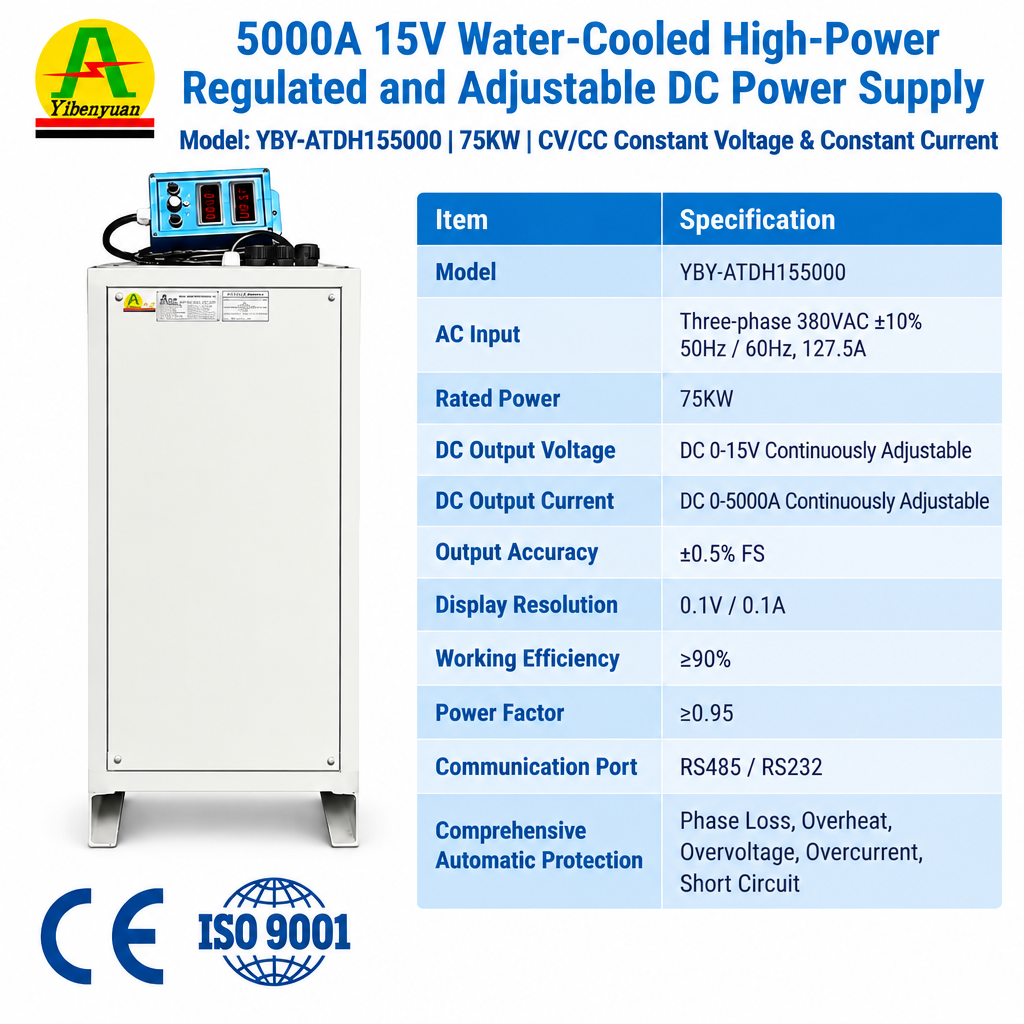
12V 15V 5000A 6000A 75KW Water Cooled High Frequency Electroplating Rectifier
Electroplating & Finishing

12V/15V 6000A 75kW Water-Cooled High Frequency Rectifier

  • Output Power: 75 kW
  • Cooling Topology: Deionized Water Cooling
  • Operational Mode: Continuous CC / CV
  • Digital Interface: RS485 Modbus-RTU
12V 4000A 48kW CV CC electroplating rectifier
Surface Treatment

12V 4000A 48kW High-Frequency Plating Switch-Mode Supply

  • Output Range: 0–12V / 0–4000A
  • Efficiency: ≥ 90% at Rated Load
  • Ripple Factor: ≤ 2% RMS
  • Protection: OTP, OVP, OCP, Phase Loss
8000A 12V water-cooled galvanizing rectifier
Continuous Galvanizing

8000A 12V Heavy-Duty Water-Cooled Galvanizing Rectifier

  • Current Rating: 8000 Amperes DC
  • Cooling Structure: Anti-Corrosive Water Channelling
  • Operating Duty: 100% 24/7 Continuous
  • Bus Bar Integration: Solid T2 Pure Copper
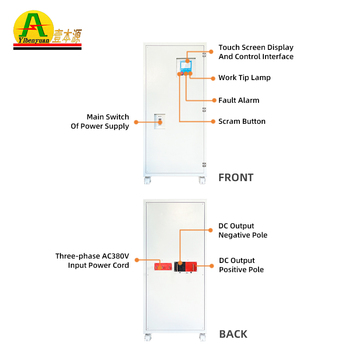
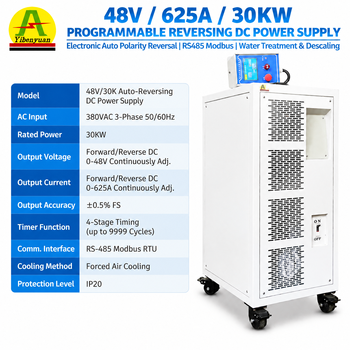
48V 625A auto polarity reversing DC power supply
Electrochemical Descaling

48V 625A 30kW Auto Polarity-Reversing DC Power Supply

  • Reversing Mechanism: IGBT Electronic H-Bridge
  • Timer Configuration: 4-Segment Forward/Reverse
  • Switching Transition: Zero Current Soft Transition
  • Enclosure Rating: IP54 Sealed Cabinet
800V 50A 20kW programmable DC power supply
EV Testing & Simulation

800V 50A 20kW High-Voltage Programmable DC Source

  • Voltage Span: 0–800V Adjustable
  • Slew Rate Control: Programmable V/I Slopes
  • Accuracy: ≤ 0.1% Full Scale
  • Communication: CAN 2.0B / RS485 / Analog
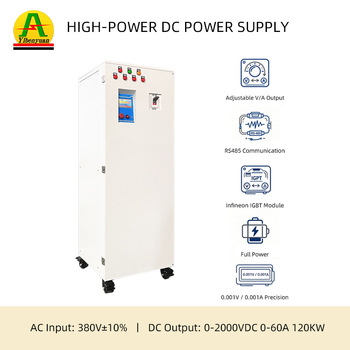
120kW 2000V programmable high voltage test power supply
Industrial Burn-In & ATE

90kW–120kW 2000V Programmable High-Voltage Bench System

  • Voltage Level: 0–2,000 VDC
  • Active Power: Up to 120 kW Output
  • Regulation Tech: High-Frequency Soft Switching
  • Safety Systems: Emergency Interlock Loop
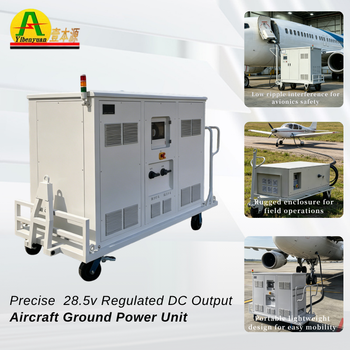
Portable 28.5V aircraft ground power unit
Aviation Ground Support

Portable 28.5V DC Aircraft Ground Power Unit (GPU)

  • Continuous Amperage: 100A to 600A Configurable
  • Starting Surge: Up to 2000A Peak (Engine Start)
  • Mobility: Heavy-Duty All-Terrain Castors
  • Standards Compliance: MIL-STD-704F / ISO 6858
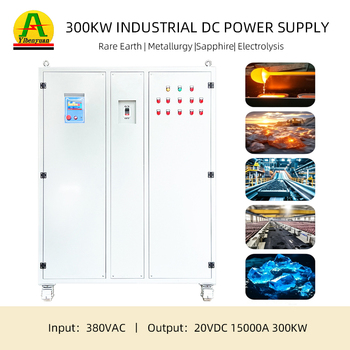
300kW 20V 15000A water-cooled high current DC power supply
Megawatt Electrolysis

300kW 20V 15,000A High-Current Water-Cooled DC Rectifier

  • Current Capacity: 15,000 Amperes Continuous
  • Cooling Mechanism: Closed-Loop Liquid-to-Water
  • Transformer Type: High-Frequency Nano-Crystalline
  • Certification: CE, LVD, EMC, ISO 9001
13+

Years Industrial Manufacturing

15,000A

Maximum Single-Unit Output

≥ 92%

Peak Full-Load Efficiency

100%

In-House Burn-In Tested

Technical Whitepaper

Engineering Principles of High-Power Switch-Mode DC Supplies

An analytical overview of conversion topologies, thermal dynamics, and closed-loop control architectures in custom industrial power systems.

In high-power industrial power conversion, the transition from legacy silicon-controlled rectifiers (SCR/Thyristor) to Insulated Gate Bipolar Transistor (IGBT) switch-mode power supplies (SMPS) has fundamentally reshaped conversion economics. Legacy SCR topologies regulate output by phase-angle firing along 50Hz or 60Hz line cycles, producing inherent sub-harmonic ripple, lagging power factors (≤ 0.75), and bulky magnetic components. Modern custom OEM DC switching power supply factories employ high-frequency Pulse-Width Modulation (PWM) and resonant soft-switching topologies operating between 20 kHz and 100 kHz. By increasing switching frequencies three orders of magnitude above line frequency, transformer iron core volume and copper conductor mass decrease dramatically, while transient response times compress from tens of milliseconds down to sub-millisecond ranges.

Industrial applications such as continuous electrolytic extraction, electroplating, water treatment, and semiconductor burn-in impose non-negotiable demands on power quality. In electroplating and hard anodizing, low ripple factor (≤ 2% RMS across full operational bandwidth) prevents crystalline lattice anomalies, ensures uniform plating thickness across complex geometries, and suppresses bath overheating. For electrodialysis and water descaling systems, reversing power polarity via high-speed electronic H-bridges instead of mechanical contactors eliminates arcing, prevents contact erosion, and allows automated self-cleaning cycle intervals with uninterrupted electrochemical operation.

Thermal management is the principal operational constraint determining mean time between failures (MTBF) in heavy-current DC power units. When designing rectifiers pushing current outputs from 5,000A to 15,000A, internal conductor losses ($I^2R$) and semiconductor switching losses generate extreme localized heat fluxes. While forced-air cooling with precision thermal-channel ducting suits moderate-current cabinets and cleanroom laboratories, demanding chemical plating, mining, and metal electrorefining atmospheres demand liquid cooling. Industrial water-cooled DC power supplies employ deionized liquid loops in direct contact with copper cold-plates supporting the IGBT power modules and fast-recovery output diodes. This isolates sensitive electronics from airborne sulfuric acid mists, alkaline vapors, and conductive metallic dust, keeping cabinet internal enclosures sealed to IP54 or IP65 ratings.

Key Engineering Takeaway: Total Cost of Ownership (TCO)

Deploying switch-mode power supplies delivering ≥ 90% operating efficiency over older 70% efficiency thyristor equipment saves an estimated 175,000 kWh annually per 100 kW delivered load on continuous duty cycles, achieving complete capital equipment amortization inside 14 months of baseline operation.
Market Intelligence

Future Procurement & Technological Trends in Custom DC Systems

Anticipating regulatory updates, semiconductor integration, and digital twin monitoring across 2025–2030 industrial supply chains.

1. Wide-Bandgap Semiconductor Integration (SiC & GaN)

The switch-mode power sector is shifting from traditional silicon IGBTs to Silicon Carbide (SiC) MOSFETs and Gallium Nitride (GaN) power stages. SiC enables higher operating breakdown voltages, substantially lower switching losses, and permissible junction temperatures exceeding 175°C. In procurement cycles over the next five years, SiC-based DC supplies will dominate aerospace GPU, test bench, and high-voltage capacitor charging markets, yielding power densities exceeding 40 W/in³ and thermal package reductions of up to 45% compared to silicon counterparts.

2. Digital Twin Telemetry & Industry 4.0 Protocols

Isolated analog control loops (0–10V, 4–20mA) are giving way to intelligent digital control architectures. Procurement managers now demand standard multi-protocol digital communication, incorporating Profinet, EtherCAT, Modbus-TCP, and CANopen into power supply motherboards. Onboard microcontrollers log real-time junction temperatures, ripple variance, input harmonics, and switching transients. This granular telemetry enables predictive failure modeling and integrates seamlessly into plant-wide Supervisory Control and Data Acquisition (SCADA) networks.

3. Decarbonization Mandates & Grid-Tied Inverters

Global regulatory pressure regarding energy efficiency (EU Ecodesign, US DOE Level VI equivalents for industrial systems) is driving DC power supply procurement specifications. Modern designs mandate high power factor correction (active PFC ≥ 0.98) and Total Harmonic Distortion (THD) under 5% at the AC input. Furthermore, in battery cycling, aerospace dyno testing, and electronic load burn-in applications, buyers are rapidly moving to bidirectional regenerative DC sources capable of feeding over 92% of consumed test energy back into the industrial power grid.

Manufacturing Excellence

Guangdong Factory Infrastructure: Engineered Reliability

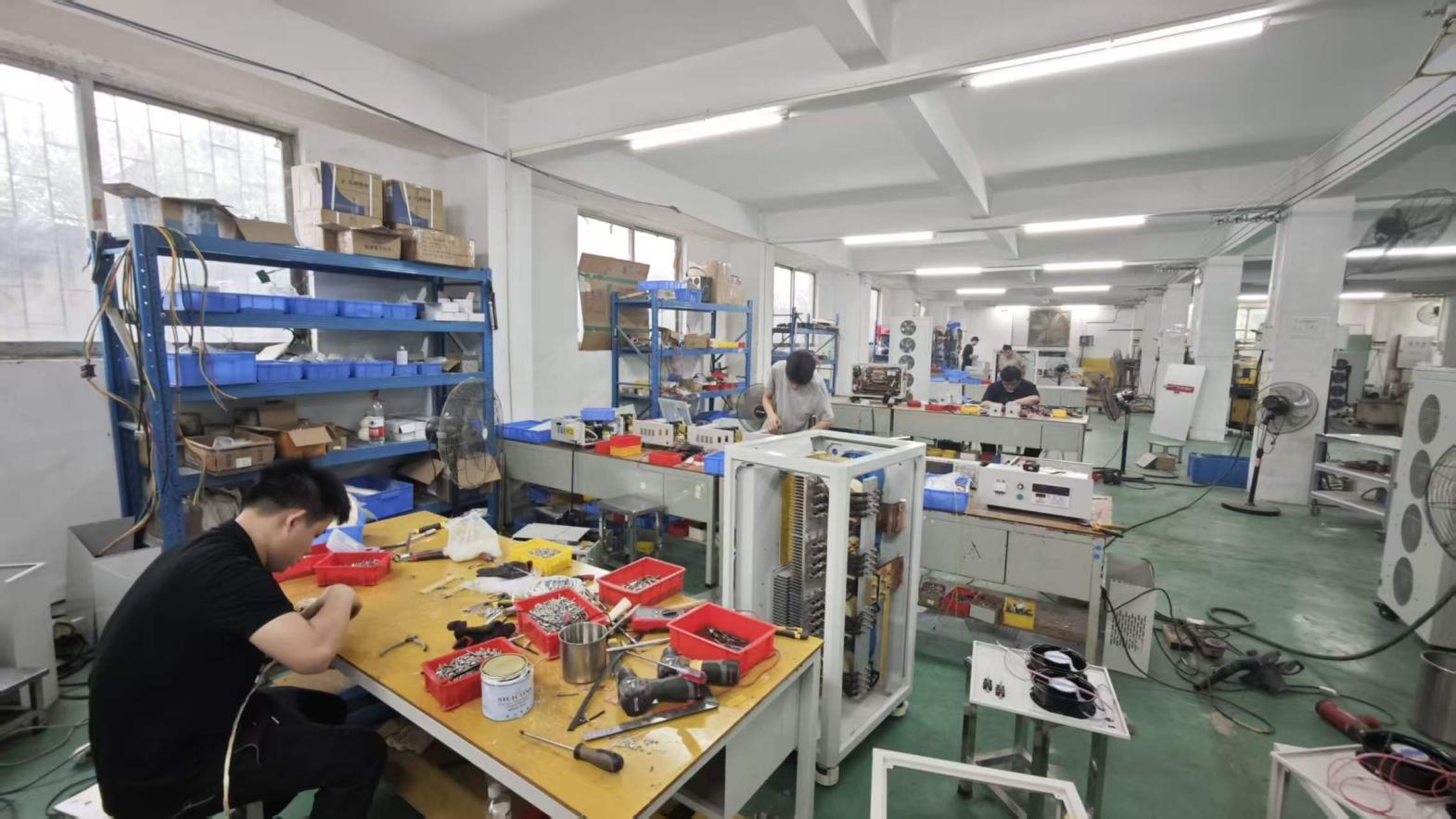
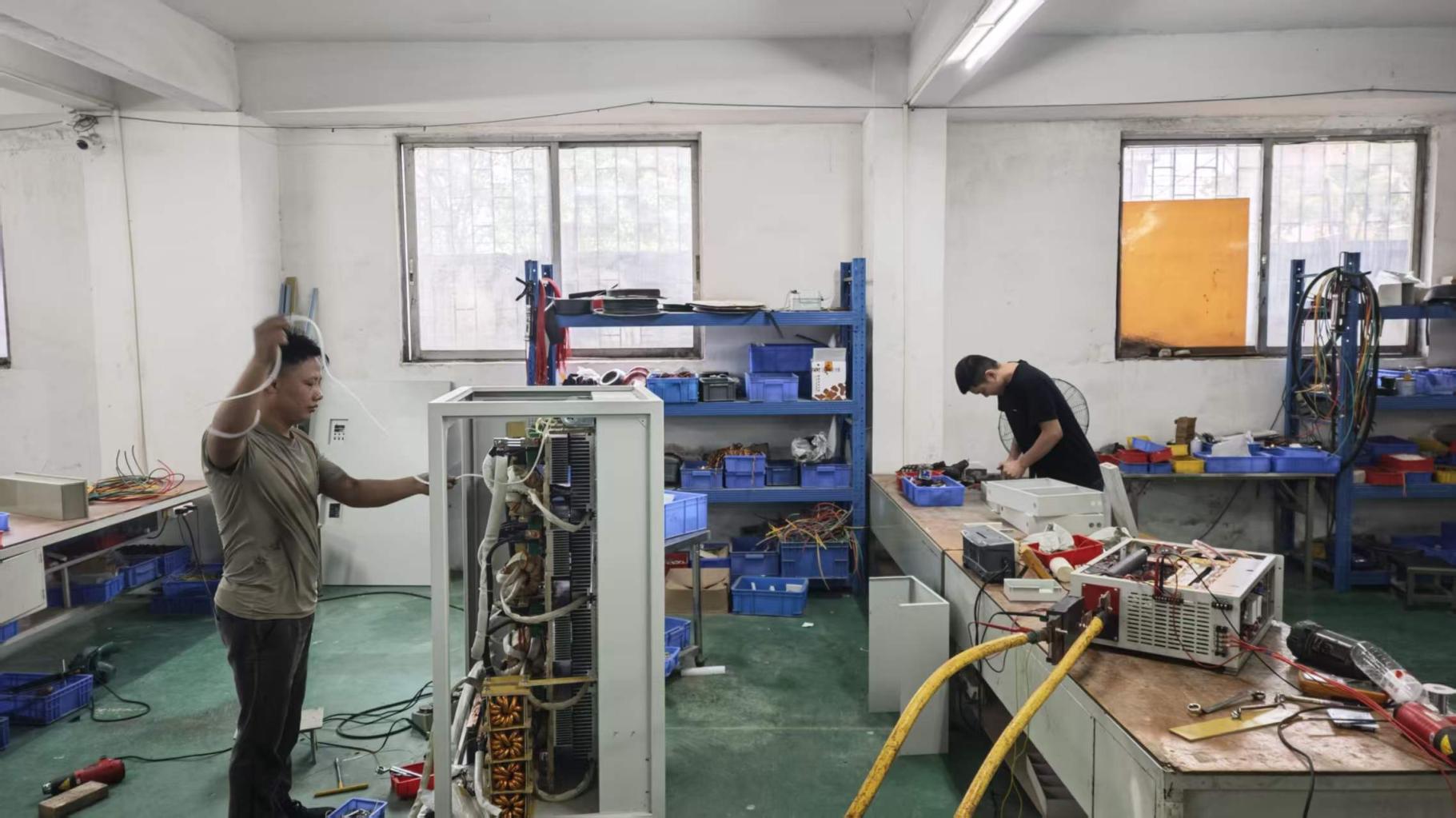
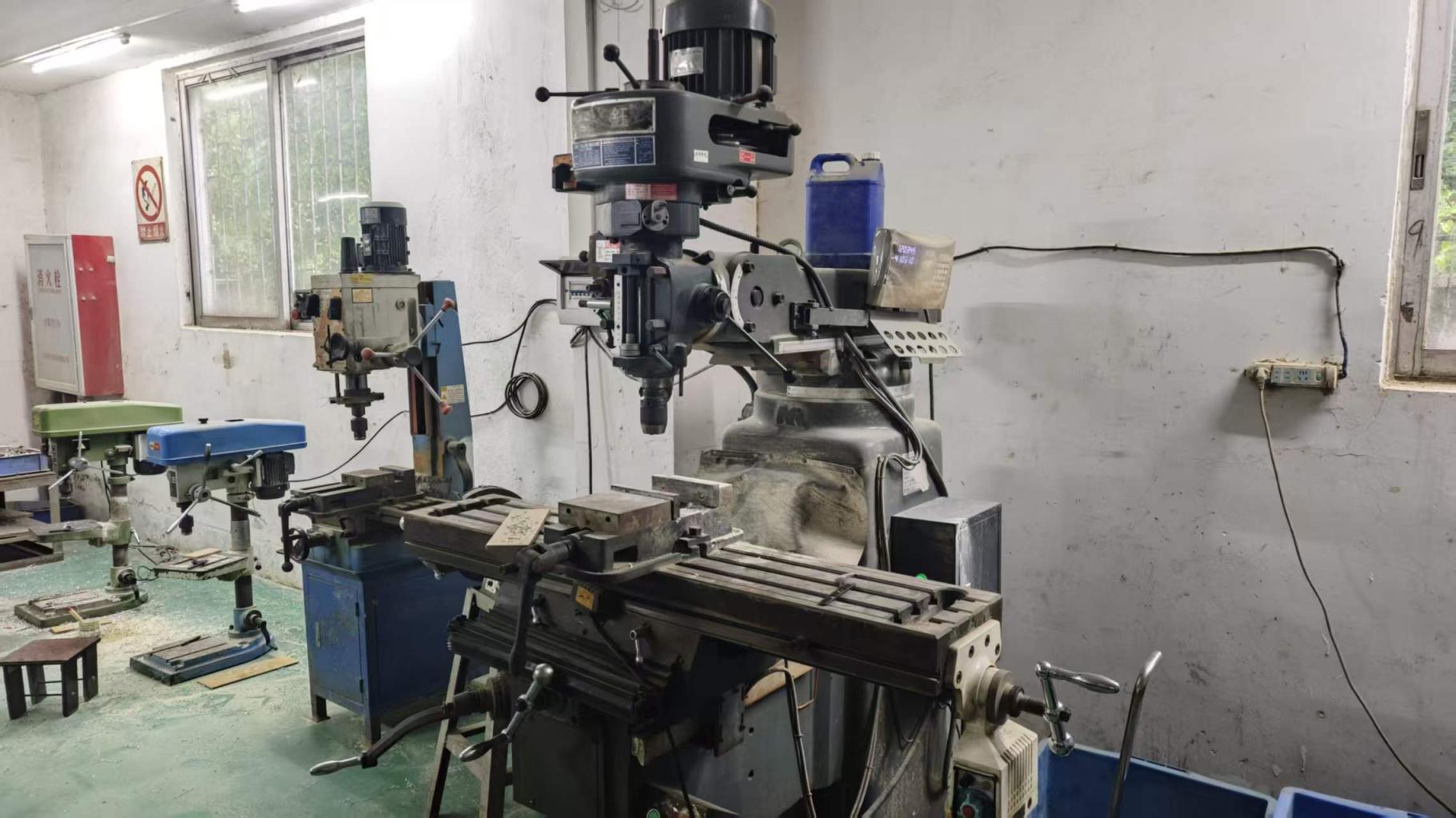
Established in 2013 with 3,000m² of dedicated precision manufacturing space, our facility handles structural fabrication, copper busbar processing, PCB assembly, and full-load burn-in under ISO 9001 certified protocols.

Verified Supply Chain & Material Traceability

We source critical components directly from verified semiconductor and materials partners, utilizing tier-one Mitsubishi and Infineon IGBT modules, Epcos film capacitors, and ultra-high magnetic permeability nanocrystalline cores. T2 pure copper conductors are sheared, punched, and milled in-house using automated CNC machinery, ensuring tight electrical tolerances and minimal joint contact resistance across high-current paths.

No Minimum Order Quantity (MOQ = 1 Unit)

Recognizing the specialized engineering requirements of research institutes, pilot development plants, and custom electrochemical systems, we support single-unit custom prototype builds without high order minimums. Customers receive complete engineering review packages, technical schematics, dimensioned cad cabinet models, and baseline performance curves prior to mechanical sign-off and assembly fabrication.

Stringent Full-Load Burn-In Qualification

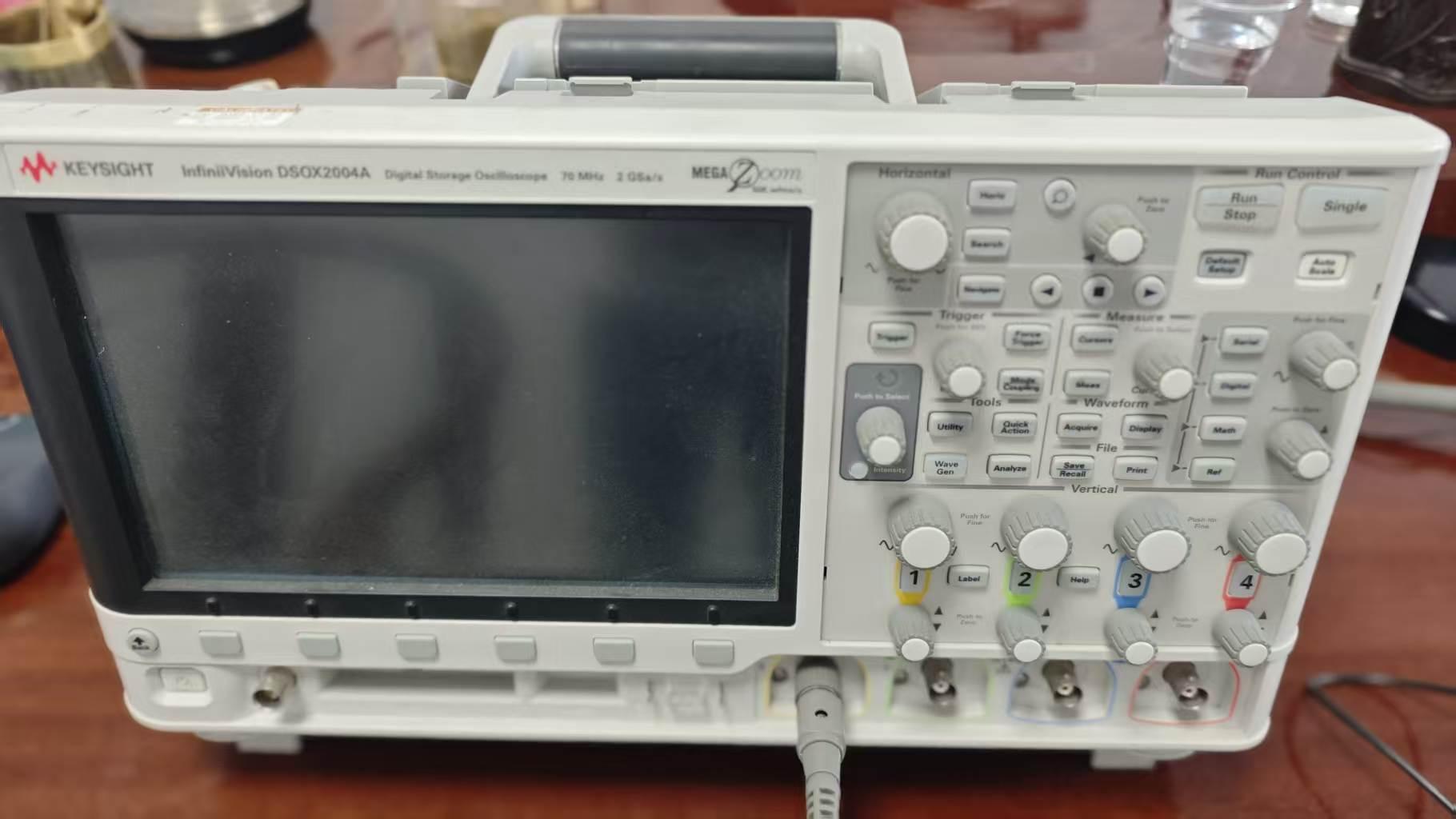
Every industrial power supply leaving our Guangdong factory undergoes continuous burn-in testing under dynamic resistive, inductive, or regenerative loads. Using multi-channel digital storage oscilloscopes, infrared thermal cameras, and precision power analyzers, engineers qualify dynamic step response, ripple voltage spectrums, phase stability, and thermal equilibrium across hours of continuous stress before packaging.

Procurement Knowledge Base

Frequently Asked Technical & Sourcing Questions

Essential technical, compliance, and shipping considerations addressed by our electrical design engineers.

What electrical parameters must be defined when configuring a custom OEM switch-mode DC supply?
To size internal power stages, transformers, and semiconductor suites correctly, buyers must provide:
  1. AC Input Specifications: Supply voltage (e.g., 208V, 380V, 415V, 480V ±10%), number of phases, and grid frequency (50Hz or 60Hz).
  2. DC Output Range: Maximum voltage ($V_{max}$), maximum continuous current ($I_{max}$), and minimum operational setpoints.
  3. Control Topologies: Constant Current (CC), Constant Voltage (CV), or automatic crossover functionality.
  4. Load Dynamics: Steady-state resistive, capacitive, electrolytic bath, high-surge motor/inrush profile, or polarity reversing requirement.
  5. Cooling & Enclosure: Ambient facility air temperature, presence of corrosive gases (acid/alkali mist), and preference between forced-air cooling and closed-loop liquid/water heat exchange.
  6. Communications Interface: Standard analog (0–5V / 0–10V / 4–20mA), isolated RS485 Modbus-RTU, Profinet, CAN bus, or integrated touch-screen HMI.
Why choose a high-frequency switch-mode rectifier over a legacy SCR thyristor system?
High-frequency switch-mode power supplies offer four primary engineering advantages over traditional line-commutated SCR rectifiers:
  • Substantial Efficiency Gains: Switch-mode architectures maintain 90% to 93% electrical conversion efficiency across a broad operating window, compared to 68% to 78% for thyristor systems, drastically cutting operating power bills.
  • Superior Output Quality: Operating frequencies above 20 kHz allow output filtering components to smooth ripple to ≤ 1% to 2% RMS, preventing micro-pitting in plating and ensuring superior film uniformity in metal finishing.
  • Footprint & Weight Reduction: High-frequency ferrite and nanocrystalline transformers are up to 70% smaller and 60% lighter than bulky 50/60Hz line transformers of equivalent power ratings, simplifying placement in tight equipment rooms.
  • High-Speed Dynamic Response: Closed-loop PWM controllers correct load transients within 200–500 microseconds, versus 10–20 milliseconds for thyristor phase control.
When is closed-loop liquid/water cooling mandatory over forced-air cooling?
Liquid cooling is strongly advised when:
  • Continuous High Current: Systems rated above 4,000A to 6,000A, where the sheer volume of air required would generate excessive acoustic noise and necessitate massive cabinet dimensions.
  • Corrosive Environments: Electroplating tanks, chrome anodizing, zinc electro-galvanizing, and chemical electrolysis facilities laden with acid vapors, alkaline salts, or abrasive dust that would degrade air-cooled heat sink fins and electronics.
  • Thermal Management in Confined Spaces: Cleanrooms or sealed laboratory environments where cabinet exhaust heat cannot be dumped directly into ambient room air without overloading HVAC infrastructure.
What international quality and safety certifications apply to Fenvix power systems?
Our facilities and product lines maintain rigorous third-party verified standards. Our factory management adheres strictly to the ISO 9001:2015 Quality Management System certified for design, manufacturing, and export. Select product series comply with the European Union CE Mark directives, including the Low Voltage Directive (LVD 2014/35/EU) and Electromagnetic Compatibility Directive (EMC 2014/30/EU), as well as RoHS hazardous substance restrictions. Our physical manufacturing premises, production capacity, and testing facilities have undergone independent, on-site supplier evaluation by TÜV Rheinland.
What trade terms, currencies, and technical support frameworks are available for export?
We provide comprehensive international procurement arrangements, supporting standard Incoterms including FOB, CIF, CFR, EXW, FCA, CIP, and DDP (Delivered Duty Paid to customer warehouse). Payments can be structured via T/T wire transfer or irrevocable documentary Letters of Credit (L/C) across major global currencies (USD, EUR, GBP, AUD, CAD, JPY, CNY). Technical support covers pre-sales engineering reviews, dimensioned structural drawings, CAD models, wiring schematics, and video commissioning support. Third-party verified on-site field engineering assistance is also available for high-capacity commissioning projects.

Accelerate Your Custom Power Engineering Project

Consult with our senior power electronics design team to specify high-power DC switching modules, electrolytic rectifiers, or programmable test benches tailored to your voltage, current, and protocol requirements.

Get Catalog