[email protected]
ISO 9001 Certified Manufacturer Exporting to 4 Continents

China Wholesale Pulse Plating Power Supply Manufacturer & Factories

High-frequency IGBT switching technology, high peak-current pulse reversal, and water-cooled industrial architectures engineered by Guangdong Fenvix Technology Co., Ltd. for zero-defect surface treatment.

Direct Factory Engineering

High-Precision Rectifiers & Pulse Power Systems

Precision-regulated DC, pulsed DC, and periodic pulse reverse (PPR) topologies. Fully customizable for continuous electroplating lines, semiconductor wafers, PCB microvias, and severe electrolytic finishing environments.

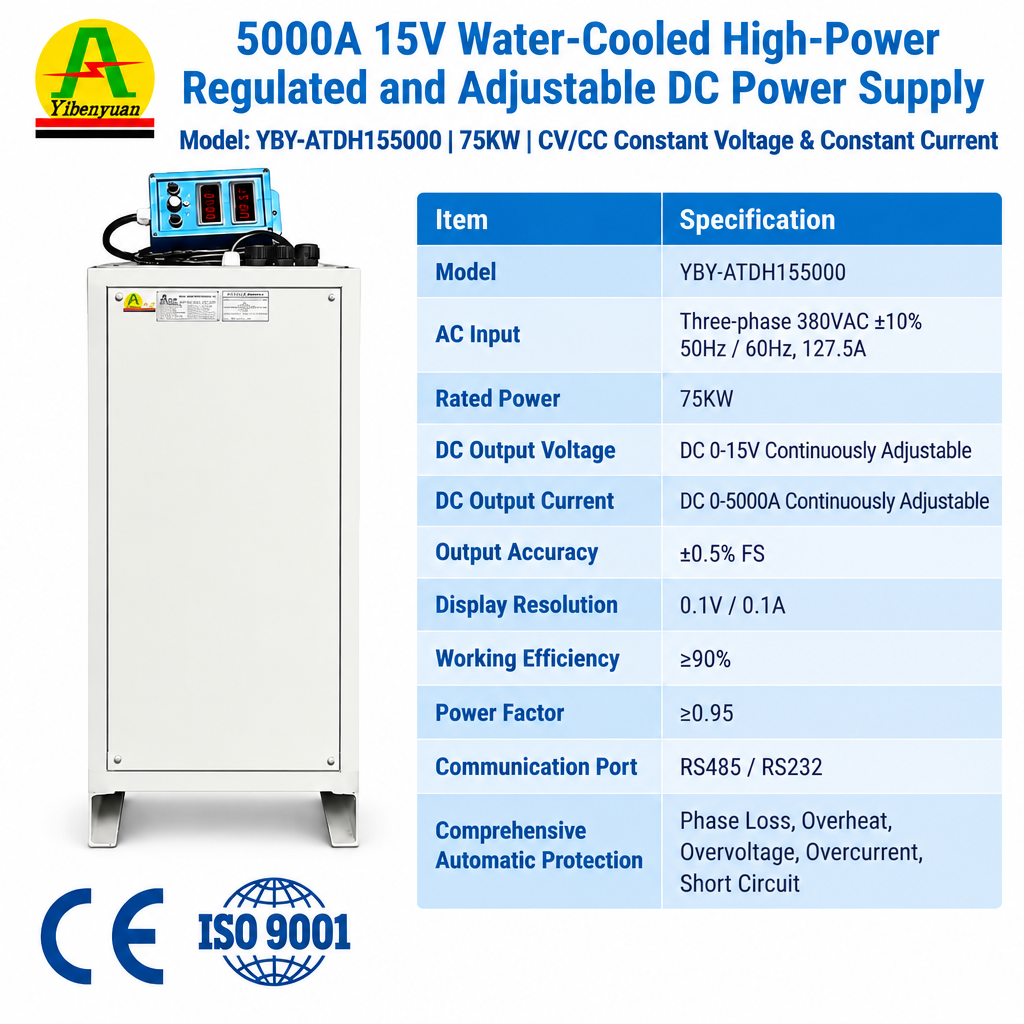
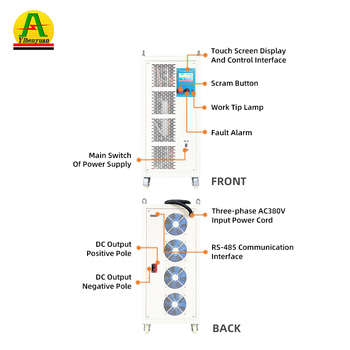
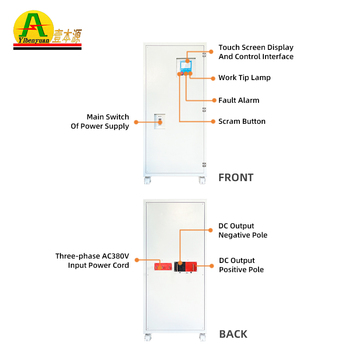
Flagship Series 12V 15V 5000A 6000A 75KW Water Cooled High Frequency Electroplating Rectifier

12V/15V 5000A-6000A 75kW Water-Cooled High Frequency Rectifier

  • TopologyIGBT High-Freq Inverter
  • Output12V-15V / 5000A-6000A
  • Cooling ModeDirect Water-Cooled Circuit
  • Ripple Factor≤ 2% RMS Digital Loop
View Product Spec
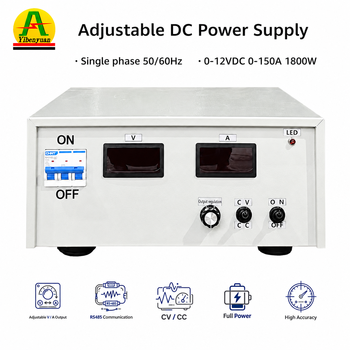
PCB & Microvia 12V 150A high frequency electroplating rectifier for PCB gold and silver plating

12V 150A Compact High-Frequency Pulse Plating Rectifier

  • ApplicationAu/Ag, Semiconductor, HDI
  • Precision±0.5% CC/CV Regulation
  • Pulse ResponseSub-microsecond Rise Time
  • CertificationsCE, LVD, EMC Compliant
Get Catalog
Continuous Line 12V 4000A 48kW CV CC electroplating rectifier

12V 4000A 48kW Industrial Surface Finishing DC Rectifier

  • Output Range0-12V Continuous, 0-4000A
  • Efficiency Rating≥ 90% at Rated Load
  • AutomationRS485 Modbus-RTU / 4-20mA
  • Duty Rating24/7 Continuous Heavy Industry
View Series Details
Severe Environment 8000A 12V water-cooled electroplating rectifier

8000A 12V Heavy-Duty Water-Cooled Galvanizing Rectifier

  • ProtectionIP54 Sealed Electronics Enclosure
  • Chassis DesignAnti-Corrosion Pure Copper Bar
  • Thermal BarrierIsolated Stainless Heat Sink
  • CustomizationForward / Backward Timing
View Series Details
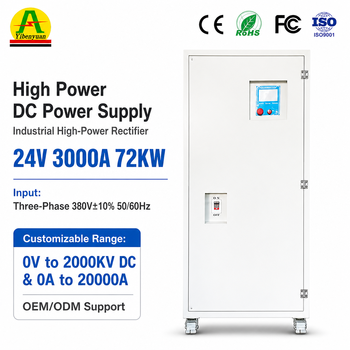
Multi-Stage Anodic 100A to 3000A anodic oxidation rectifier

100A–3000A Programmable Anodic Oxidation Rectifier

  • Process TargetHard Coat & Architectural Anodizing
  • ProfilesMulti-Segment Ramping Voltage
  • Current DensityAuto Constant Current Balance
  • DiagnosticsOver-Voltage / Thermal Alarm
View Series Details
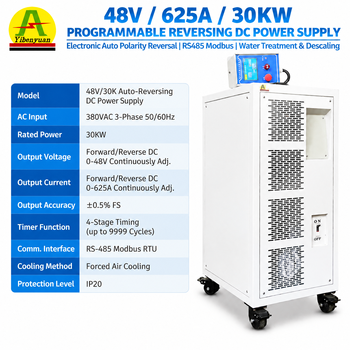
Polarity Reversing 48V 625A auto polarity reversing DC power supply for water treatment descaling

48V 625A 30kW High-Speed Auto-Polarity Reversing Source

  • Reversal SwitchIGBT Solid-State Commutation
  • Cycle Adjust10ms to 9999s Forward/Reverse
  • Electrode PreservationSelf-Cleaning Descaling Control
  • InterfacePLC Fieldbus / Isolated Analog
View Series Details
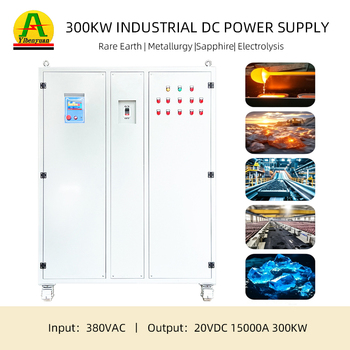
Extreme Output 300kW 20V 15000A water-cooled high current DC power supply

300kW 20V 15,000A Mega-Ampere Electrolysis DC Rectifier

  • Current DeliveryUp to 15,000 Amperes Sustained
  • ArchitectureModular Master-Slave Synthesis
  • Heat ExchangerDeionized Water Cooling Loop
  • CertificationsISO 9001 Process Audited
View Series Details
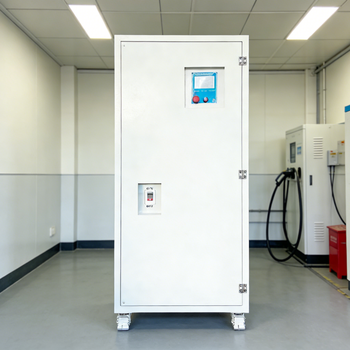
High-Current Bridge 160kW 2500A heavy-duty electrolysis DC rectifier

160kW 2500A Heavy-Duty Electrolysis & Hard-Chrome Supply

  • Load Regulation0.1% Full Range Stability
  • Dynamic Response< 1 millisecond load step recovery
  • Protection MatrixPhase-Loss, Thermal, Short Circuit
  • Control OptionsTouchscreen HMI & Modbus Gateway
Get Catalog
Engineering White Paper

The Physics and Metallurgical Superiority of Industrial Pulse Plating

A technical analysis of mass-transport overpotential, grain boundary nucleation, and high-frequency pulsed power topologies over traditional thyristor-based SCR direct current systems.

In modern electrolytic surface engineering, component miniaturization, exacting deposit uniformity, and the elimination of metallurgical defects have pushed continuous direct current (DC) power sources beyond their thermodynamic limitations. Pulse Plating Power Supplies—encompassing Unipolar Pulsed Current (PC) and Periodic Reverse Pulse Current (PPR)—introduce the time dimension into electrodeposition. By modulating pulse-on time (τon), pulse-off time (τoff), and peak current density (jp), operators decouple the crystal nucleation rate from diffusion layer kinetics.

Key Engineering Finding: According to mass-transport boundary layer dynamics, the steady-state hydrodynamic diffusion layer thickness (δ) limits direct current density before hydrogen embrittlement occurs. Pulse plating superimposes a pulsating diffusion layer (δp) that is substantially thinner, allowing instantaneous peak currents up to 10 to 100 times greater than continuous DC equivalents without burning the deposit or exhausting metal ions at the cathode interface.

1. Grain Refinement, Nucleation Kinetics, and Deposit Integrity

During electrodeposition, crystal nucleation competes directly with crystal growth. High overpotential (η), which is mathematically proportional to elevated peak current density through the Butler-Volmer equation, exponentially elevates the thermodynamic nucleation rate. Because pulse plating delivers severe, microsecond-duration current peaks, it forces instantaneous high overpotentials, generating billions of micro-nuclei per square millimeter. The subsequent pulse-off period allows ion replenishment in the electric double layer while dissipating thermal stress.

This microstructural alteration creates an ultra-fine, equiaxed grain matrix free of columnar voids. In gold, silver, copper, and hard-chrome finishing, pulse-plated coatings demonstrate higher microhardness, drastically reduced porosity, superior corrosion barrier properties, and lower electrical contact resistance. For semiconductor packaging, PCB microvia blind-hole filling, and lead-frame manufacturing, high peak pulsed power eliminates center pinch-off (void formation), ensuring dense, bottom-up electrolytic deposition.

2. Unipolar Pulse vs. Periodic Pulse Reverse (PPR) Dynamics

While unipolar pulsing optimizes nucleation during τon and concentration relaxation during τoff, Periodic Pulse Reverse (PPR) power supplies introduce a deliberate anodic pulse (τrev). During the reverse phase, the workpiece briefly becomes the anode. Micro-peaks, high-current dendrites, and loosely adsorbed impurities are electrochemically etched away prior to the next cathodic cycle.

This dynamic micro-level electrochemical polishing removes sub-surface defects in nickel, zinc-nickel alloy, and copper foils. In printed circuit board (PCB) horizontal continuous plating lines, PPR rectifiers achieve throwing powers (the ratio of center-to-surface copper deposit thickness) exceeding 90% to 100% on high-aspect-ratio holes (>10:1), a metric unachievable using baseline direct current.

Topological Parameter Conventional Silicon Controlled Rectifier (SCR) High-Frequency Switch-Mode Rectifier (IGBT) Advanced IGBT Pulse Plating Power Supply
Switching Frequency 50Hz / 60Hz Line Frequency 20 kHz – 50 kHz Fixed Switch Up to 100 kHz Programmable Pulse Train
Current Regulation Phase-angle cut; high low-frequency ripple High-speed PWM continuous DC Digital Peak Current & Duty-Cycle Control
Throwing Power (High Aspect Ratio) Poor (< 50% on through-holes > 8:1) Moderate (60% – 70%) Exceptional (> 90% – 105%)
Grain Morphology Columnar, porous, anisotropic grain size Refined crystalline structure Ultra-fine, equiaxed, nano-crystalline
Thermal & Chemical Efficiency Efficiency ~65%-72%; massive copper loss Efficiency ~88%-92%; compact core Efficiency ~90%-93%; optimized bath yield
Electrical Energy Savings Baseline consumption 15% – 25% Reduction vs SCR 20% – 35% Lower Chemical & Power Waste
Procurement Intelligence

Future Sourcing & Technological Trends (2025–2030)

What industrial procurement teams, electrical engineers, and factory plant managers must consider when specifying capital equipment for surface finishing lines.

Wide-Bandgap Semiconductors (SiC & GaN)

The industry is rapidly transitioning from standard Silicon IGBTs to Silicon Carbide (SiC) MOSFETs. SiC enables switching frequencies above 100kHz with negligible switching losses, facilitating nanosecond rise times for pulse plating, smaller magnetic transformers, and sustained operations up to junction temperatures of 175°C.

Industry 4.0 & Digital Fieldbus Telemetry

Isolated analog control (0-10V/4-20mA) is giving way to deterministic digital buses including Modbus-TCP, Profinet, and EtherCAT. Modern rectifiers export real-time waveforms, bath amp-hour accumulation, peak current snapshots, and predictive ripple drift alerts directly to enterprise MES platforms.

Closed-Loop Total Cost of Ownership (TCO)

Global environmental mandates, carbon footprint auditing, and skyrocketing precious metal prices (Gold, Palladium, Rhodium) dictate procurement criteria. Pulse plating saves 15% to 30% of precious metal chemistry through tighter thickness tolerances, paying off capital equipment premiums in under 12 months.

Enterprise Credentials

Guangdong Fenvix Technology Manufacturing Excellence

Direct factory engineering and end-to-end quality sovereignty. From CNC sheet metal fabrication and robotic copper busbar punching to multi-stage oscilloscope load-bank burn-in.

Founded in 2013 in Guangzhou, Guangdong, China, Guangdong Fenvix Technology Co., Ltd. has established an integrated production infrastructure spanning 3,000 square meters. Unlike assembly-only exporters or regional sourcing trading agents, Fenvix maintains absolute technical control over every discipline of industrial power conversion: electromagnetic transformer winding, PCB surface-mount assembly, CNC structural cabinetry, anti-corrosion conformal coating, and full-power resistive load testing.

2013
Established Factory
3,000 m²
Production Facilities
15,000 A
Max Single Unit Capacity
0 MOQ
Custom Prototype Support

Factory Tooling, Assembly Processes, and Precision Metal Fabrication

Industrial rectifiers operating inside wet, corrosive surface finishing plants require rugged chassis protection. Fenvix manufactures all heavy-gauge copper busbars, water heat-sink plates, and protective cabinets in-house utilizing precision shearing, punching, milling, drilling, and tapping machinery:

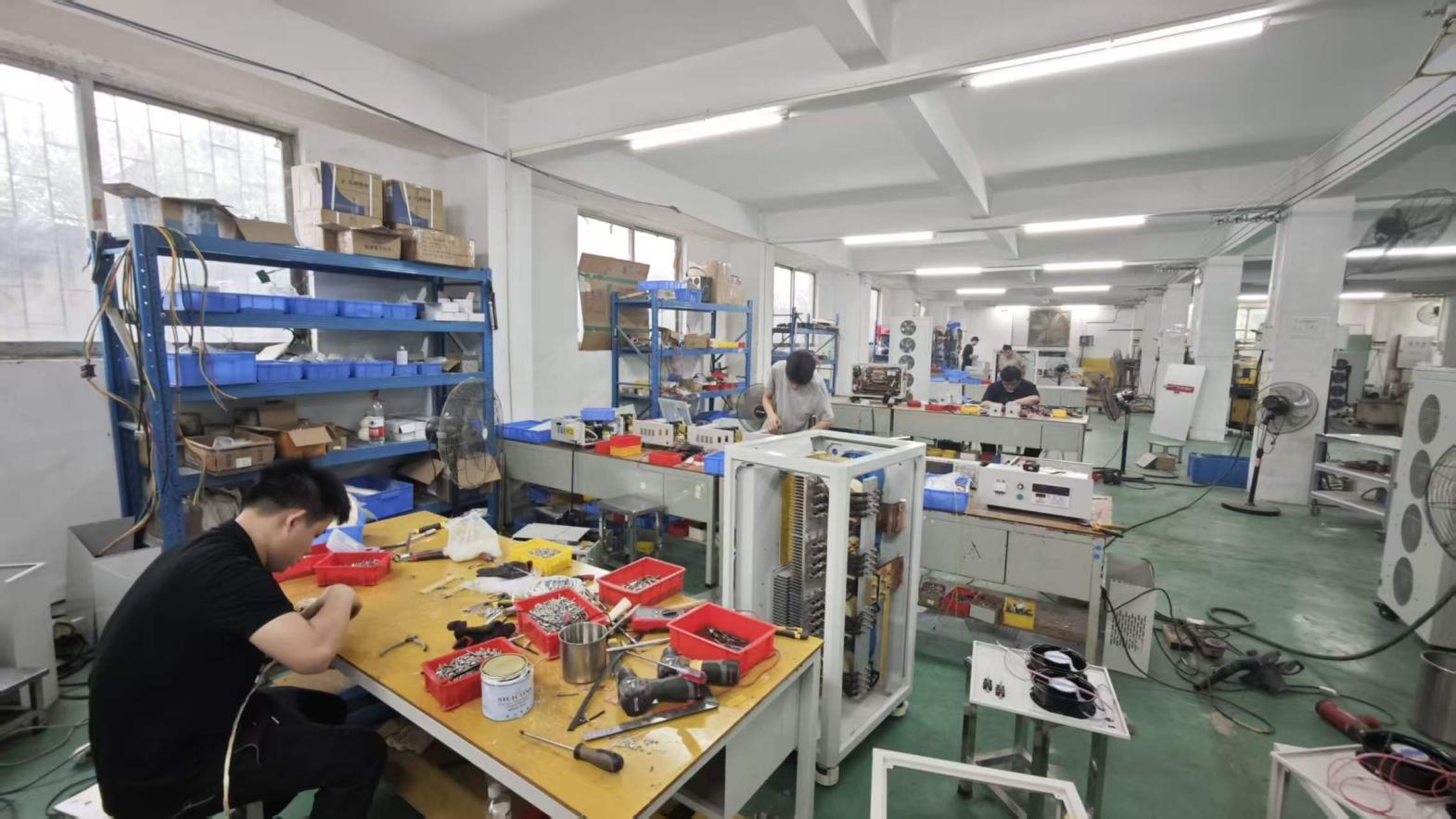
Fenvix high current rectifier production workshop
Main Assembly Workshop
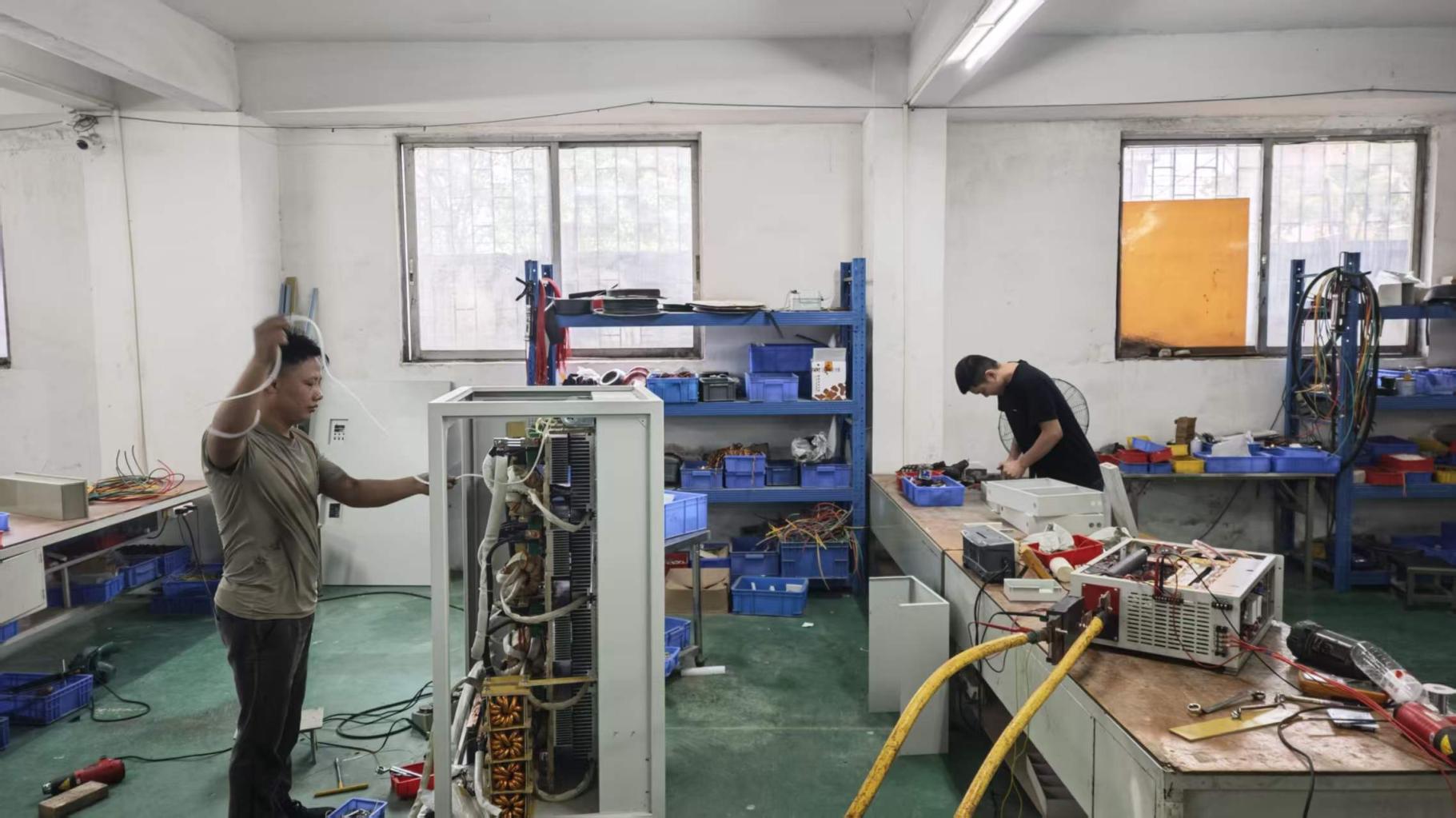
Finished rectifier cabinets ready for testing
Finished System Cabinets
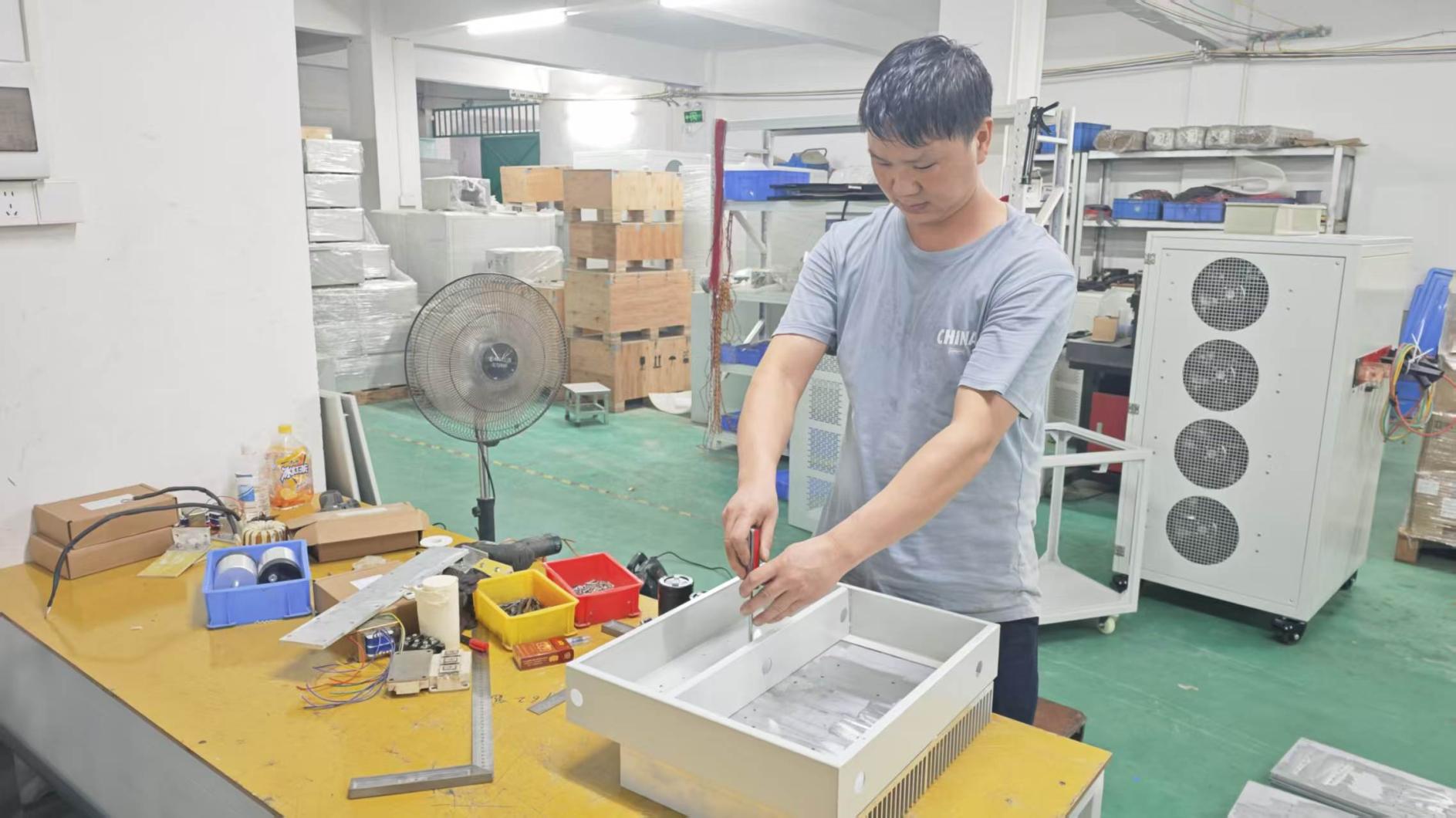
Electronic power supply assembly stage
High-Power Inverter Assembly
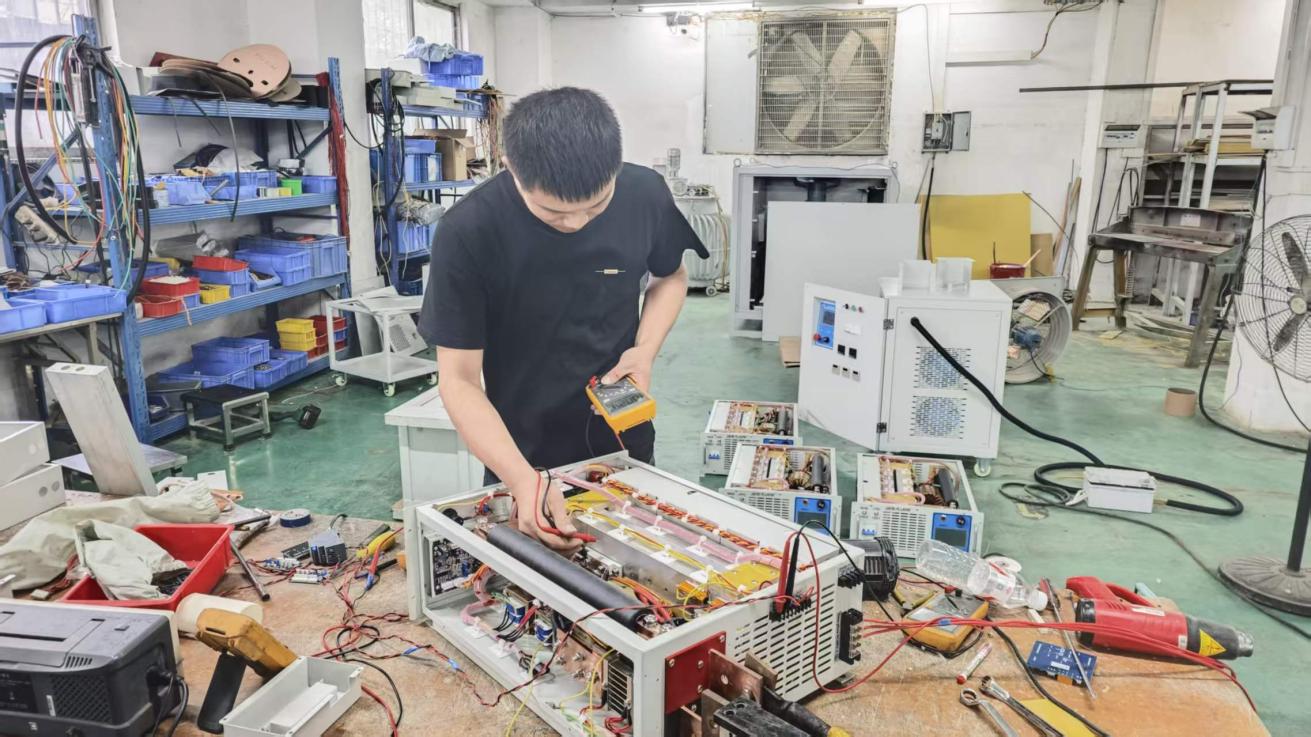
System commissioning and digital parameter tuning
System Commissioning & Calibrations
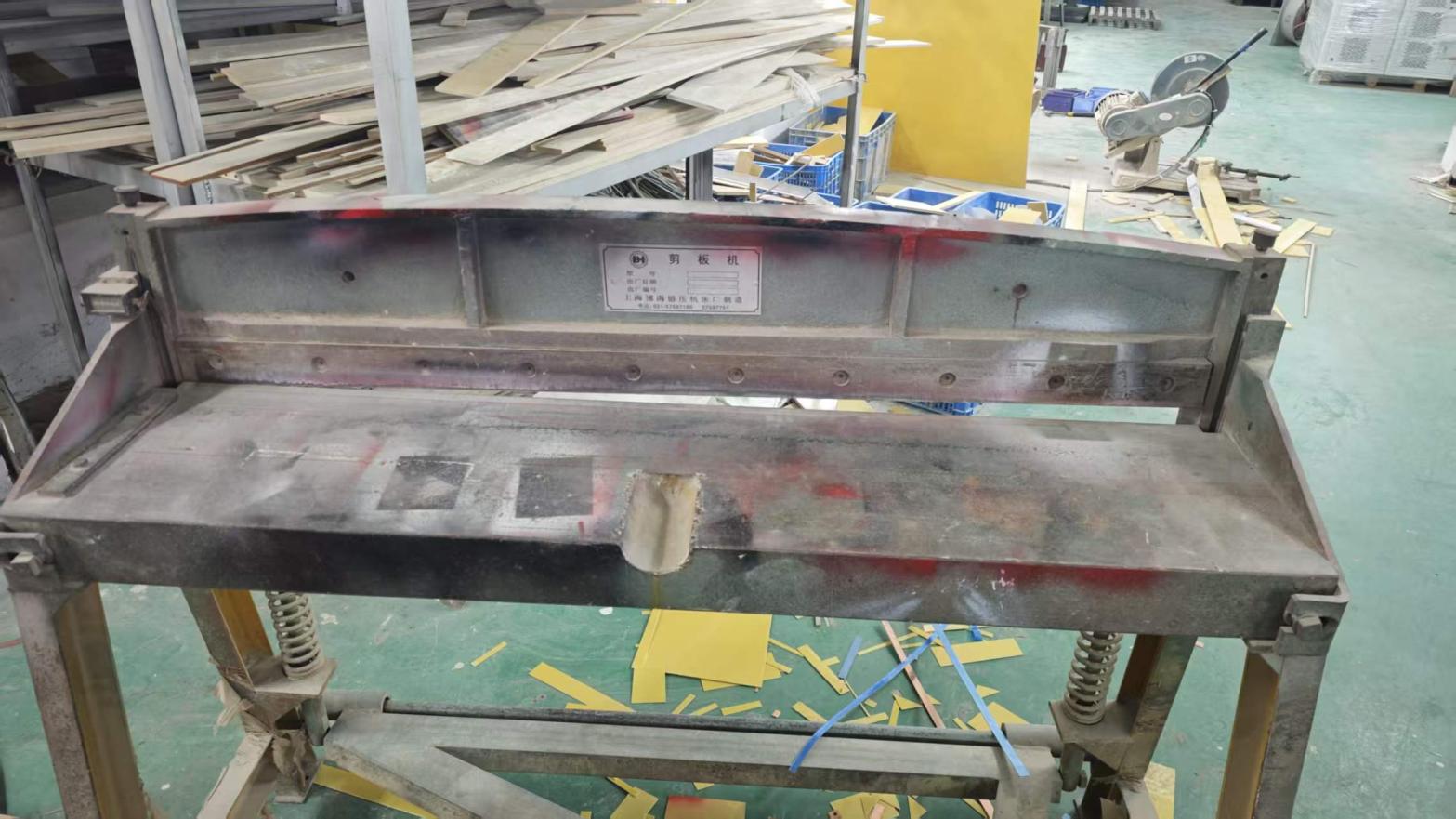
Precision plate shearing machine for chassis panels
CNC Plate Shearing Line
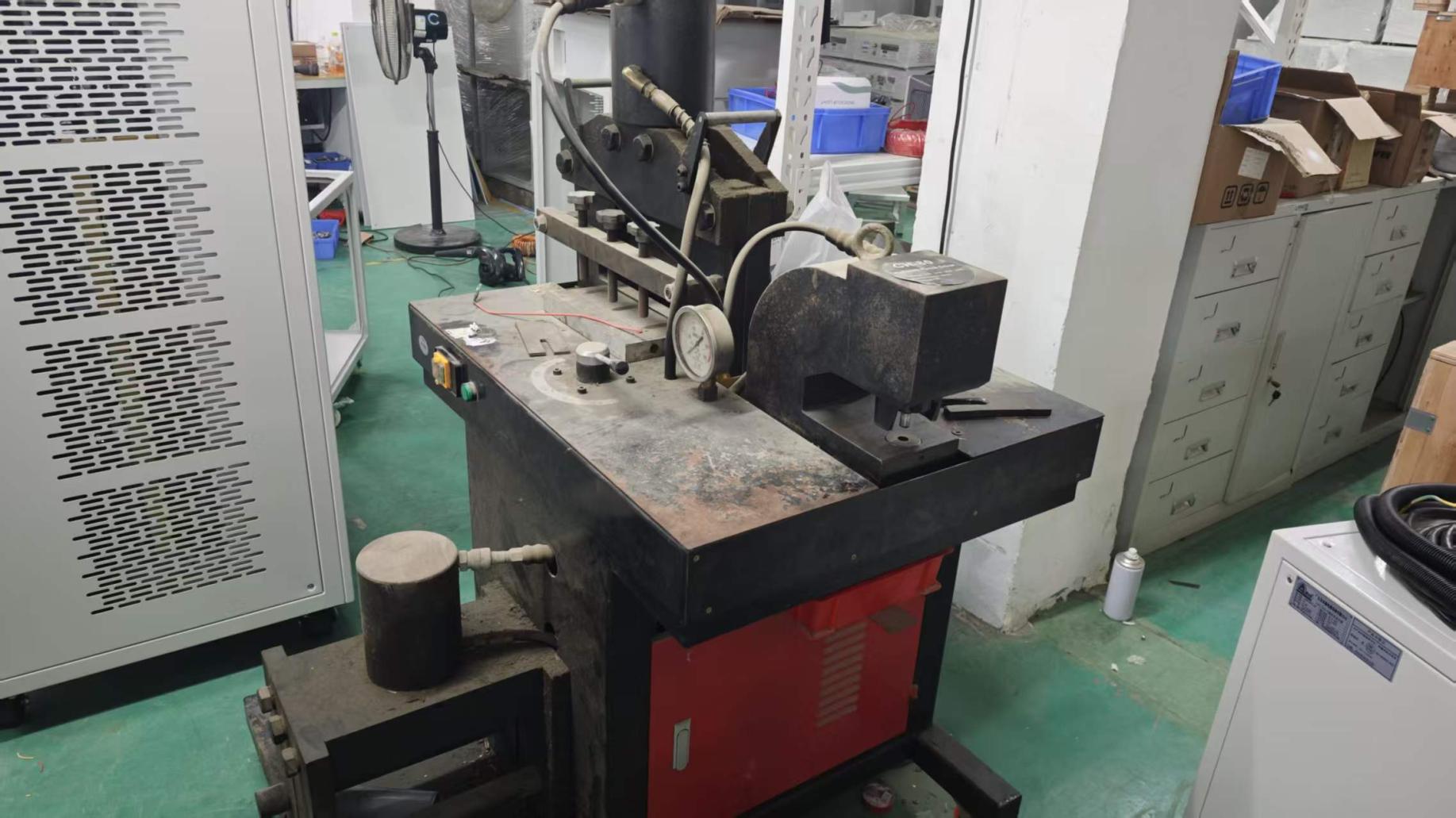
Hydraulic punching machine for copper busbars
Hydraulic Busbar Punching
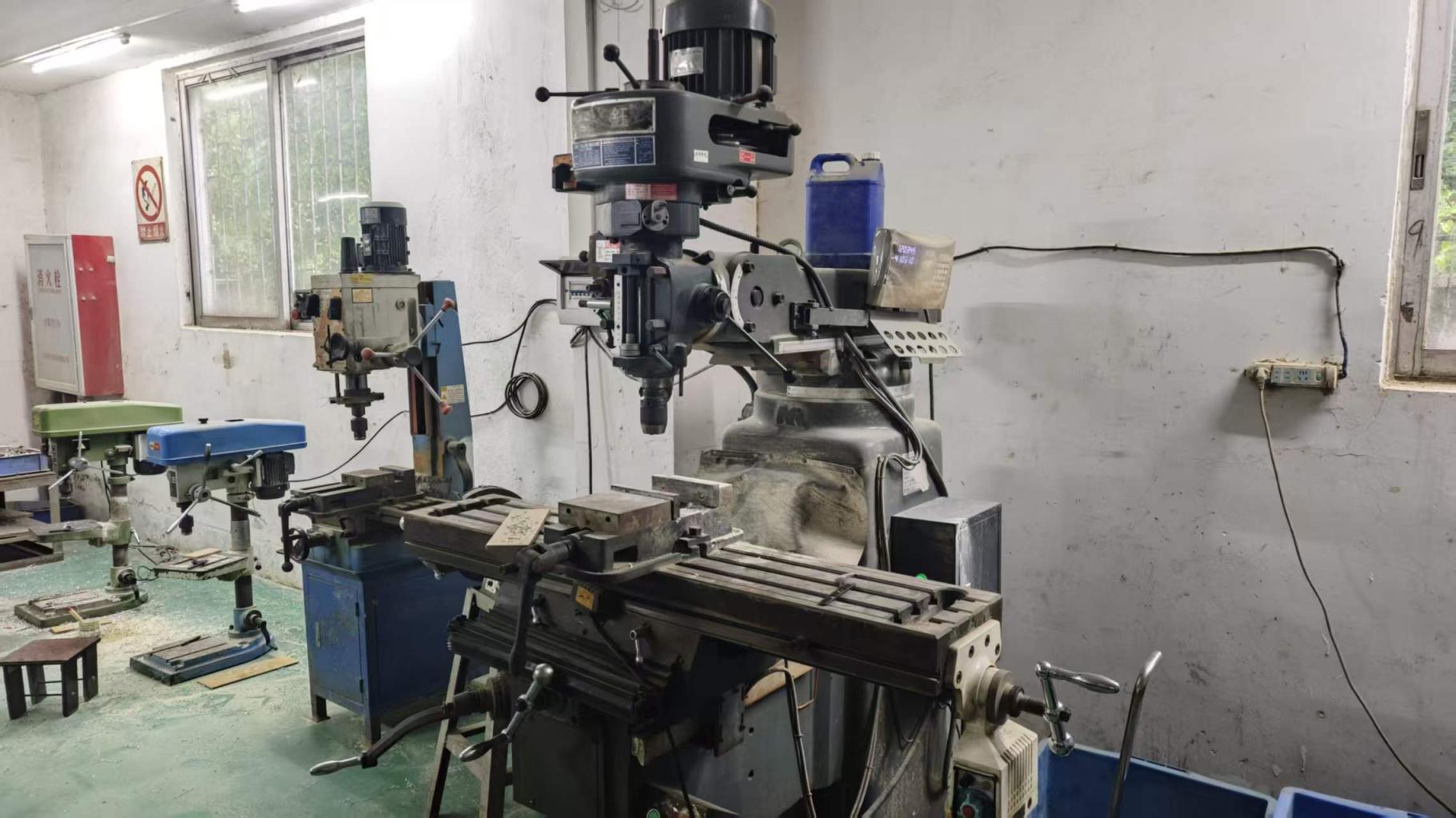
Heavy milling machine for water-cooled heat sinks
Heat Sink Precision Milling
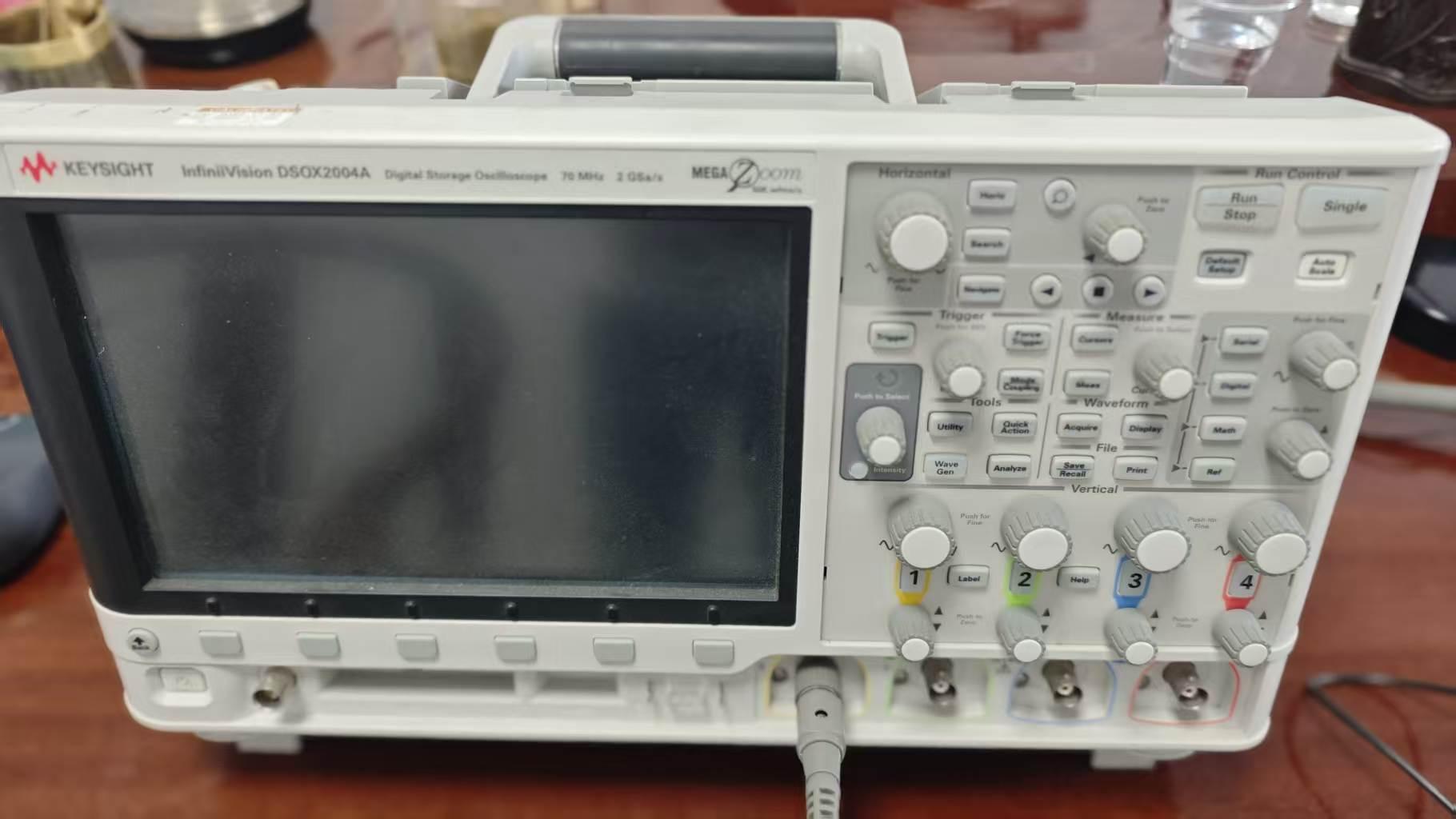
Digital oscilloscope wave analysis and ripple verification
Dynamic Oscilloscope & Ripple Burn-In
Procurement Knowledge Base

Frequently Asked Questions for Industrial Buyers

Direct technical and commercial answers addressing electrical sizing, duty cycles, cooling topologies, and international logistics.

What precise engineering data is required to quote a pulse or electroplating power supply?
To properly size the primary power stage, transformer ratio, and cooling architecture, our engineering group requires:
  • Grid Input Voltage & Frequency: e.g., 380V/400V/415V/480V AC ±10%, 3-phase, 50Hz or 60Hz.
  • Output Operating Envelope: Rated continuous DC current (A), peak pulsed current (Apeak), and nominal operating voltage (V).
  • Waveform Parameters: Forward pulse duration (τon), off-time (τoff), frequency range (Hz to kHz), and whether Periodic Reverse (PPR) is needed.
  • Process Chemistry & Tank Conditions: Metal bath composition, total active immersion surface area, and chemical temperature.
  • Cooling Infrastructure: Availability of deionized or facility chilled water vs. ambient forced air.
  • Automation Interface: Modbus-RTU (RS485), Profinet, Ethernet/IP, or 0-10V/4-20mA analog signal isolated loops.
When must an engineer choose water cooling over forced-air cooling in plating plants?
Forced air cooling draws ambient factory air over the internal semiconductor heat sinks. In electroplating and anodizing rooms, this air contains sulfuric acid, hydrochloric fumes, copper/nickel salt aerosol, and fine airborne contaminants that degrade electronics, short PCB traces, and foul fans. Water cooling enables the electrical enclosure to be completely sealed up to IP54 or NEMA 4 ratings. Deionized water passes directly through internal copper heat-exchange blocks, isolating sensitive IGBTs from acidic shop air. Water cooling is strongly advised for outputs exceeding 3,000A, continuous 24/7 duty lines, and ambient air temperatures above 40°C.
What are the minimum order quantities (MOQ) and sample prototyping policies?
Fenvix operates with a strict No MOQ (Minimum Order Quantity = 1 Unit) policy. We frequently support OEM pilot plants, semiconductor R&D laboratories, and plating line integrators with single custom-built prototype rectifiers. Batch production orders benefit from scale-engineered pricing, scheduled releases, and private-label OEM branding options.
What quality credentials and third-party verifications does Fenvix hold?
Our company operates in compliance with an audited ISO 9001:2015 Quality Management System covering R&D, manufacturing, assembly, and testing. Production models comply with European CE safety standards, Low Voltage Directive (LVD 2014/35/EU), Electromagnetic Compatibility (EMC 2014/30/EU), and RoHS restrictions. Furthermore, our manufacturing facility in Guangzhou has been rigorously audited on site by TÜV Rheinland, confirming legitimate production capacity, tooling, and quality control systems.
Which international trade terms (Incoterms) and payment currencies are supported?
We support global industrial shipping under FOB (Guangzhou, Shenzhen, Hong Kong), CIF, CFR, EXW, FCA, CPT, CIP, and door-to-door Delivered Duty Paid (DDP) options with customs clearance. We accept T/T (Telegraphic Transfer), irrevocable confirmed L/C at sight, and standard credit terms for vetted institutional buyers. Invoicing can be executed in USD, EUR, GBP, JPY, CAD, AUD, HKD, CHF, or CNY.
How does Fenvix manage overseas technical support, commissioning, and warranty service?
Every shipment includes comprehensive technical documentation: full schematic diagrams, terminal pinout maps, software communication registers, and spare fuse/component kits. Pre-sales and post-commissioning guidance are delivered via dedicated video conferencing with design engineers. If critical line downtime occurs, modular pull-out power modules can be air-shipped for immediate replacement. On-site engineer dispatch for commissioning and system integration is available upon request.
Verified International Compliance & Factory Audits
CE Certified Rectifier
RoHS Directive Compliant
LVD Safety Conformity
EMC Electromagnetic Compatibility
TUV Rheinland On-Site Factory Verified

Request Full Technical Specifications & Factory Quotations

Download our complete industrial power supply catalog, including comprehensive wiring schematics, modular dimension footprints, pulse waveform timing libraries, and wholesale pricing tiers.