High-Efficiency Power Conversion Systems for Global Industry
Explore our most trusted industrial power supplies. Manufactured in compliance with ISO 9001 and verified on-site by TÜV Rheinland, these systems deliver exceptional power density, sub-1% ripple, and continuous 24/7 duty cycle endurance.
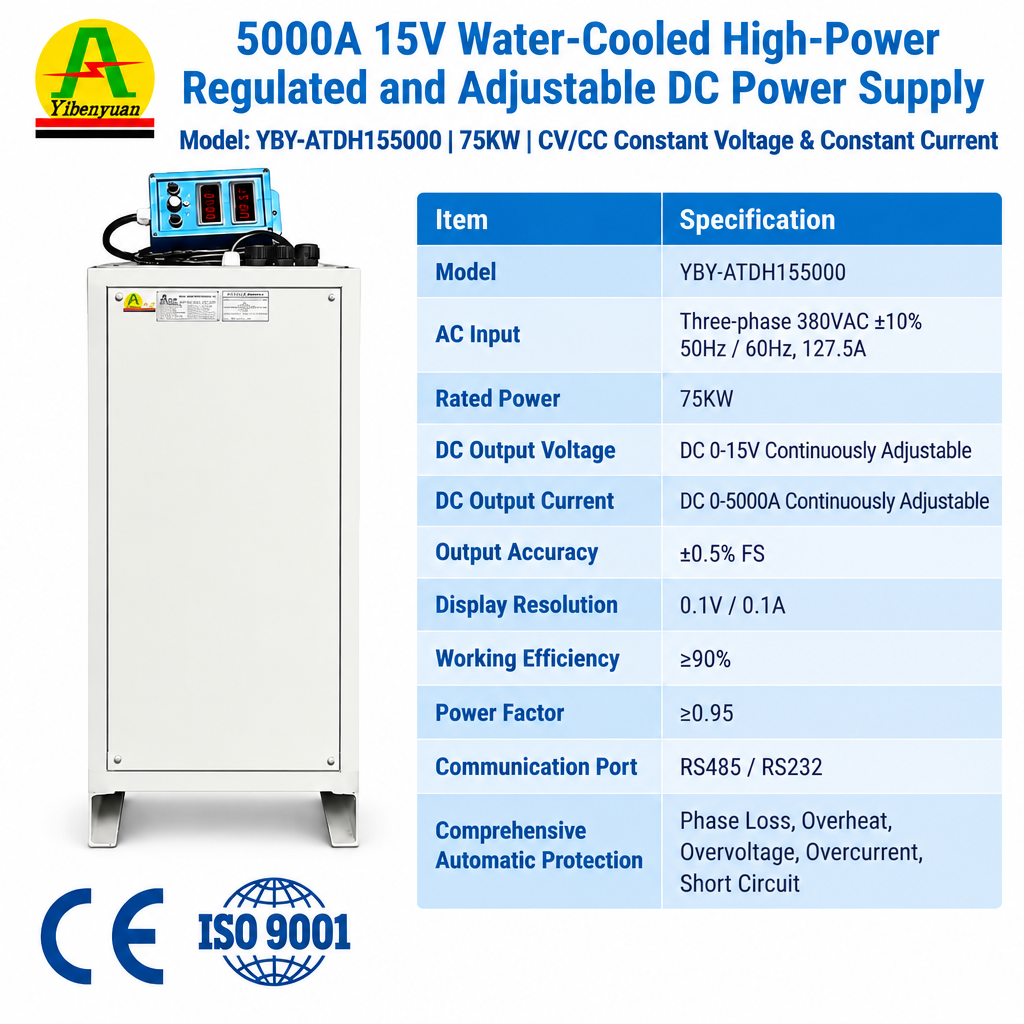
12V–15V 5000A–6000A 75kW Water Cooled Plating Rectifier
- TopologyPhase-Shifted IGBT ZVS
- Output Range0–15V / 0–6000A Cont.
- Cooling TypeDeionized Water Cooling
- InterfaceRS485 Modbus / 4–20mA
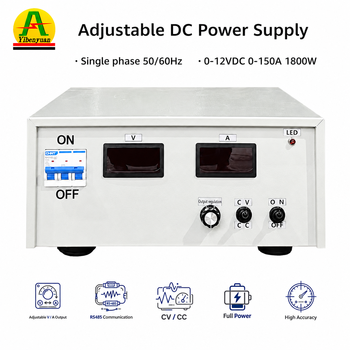
12V 150A High-Frequency Precision Electroplating Rectifier
- Target AppPCB, Gold & Silver Plating
- Current Ripple≤ 1% RMS Ultra-Low
- RegulationConstant Voltage / Current
- Efficiency≥ 90.5% at Rated Load
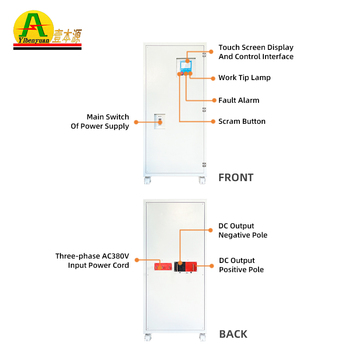
8000A 12V Water-Cooled Continuous Galvanizing Rectifier
- EnvironmentAcid/Alkaline Mist Sealed
- Input Line380V / 415V / 480V 3-Phase
- Power Factor≥ 0.94 Active Correction
- Busbar TypeT2 High-Purity Copper
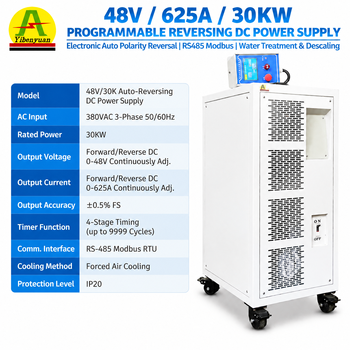
48V 625A 30kW Auto-Polarity Reversing Descaling Power Supply
- OperationWater Treatment & Descaling
- Switching Time≤ 50ms Seamless Inversion
- SequencingMulti-Segment Cyclic Timer
- ProtectionOver-Temp, Phase-Loss, Short
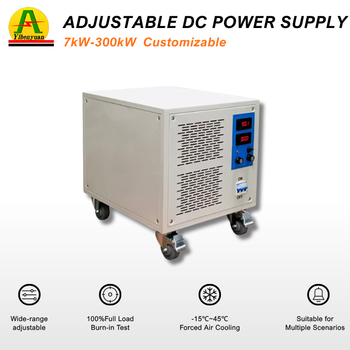
800V 50A 20kW Programmable High Voltage DC Test Source
- ApplicationEV Battery Pack & Inverter R&D
- ProgrammingSCPI / LabVIEW Drivers
- Slew RateAdjustable Voltage Ramp
- DisplayHigh-Resolution Digital LED
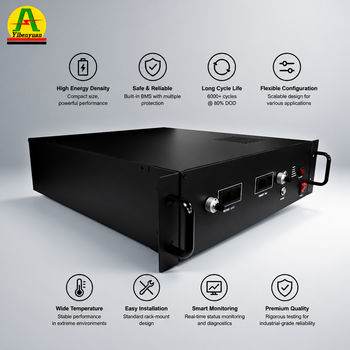
0–100kV Capacitor Charging & Discharging HV Power Supply
- ApplicationPulsed Power & Physics Labs
- Repeatability≤ 0.1% Energy Consistency
- InterlockHigh-Speed Crowbar Protection
- Form Factor19-Inch Rack / Console

Portable 28.5V DC Aircraft Ground Power Unit (GPU)
- StandardISO 6858 & MIL-STD-704F
- Continuous100A–600A Adjustable
- Peak StartingUp to 2000A Instantaneous
- MobilityHeavy-Duty Ruggedized Casters
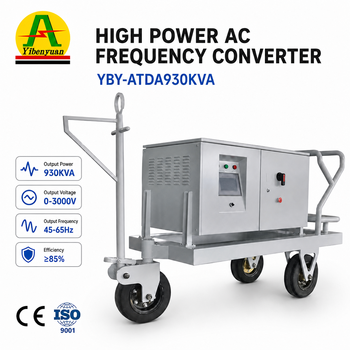
930kVA 3-Phase 400Hz Aviation Static Frequency Converter
- Output WavePure Sinusoidal THD < 2%
- Input / Output50/60Hz In → 115/200V 400Hz Out
- Overload125% for 10 min; 150% for 60 sec
- DeploymentAirport Apron & MRO Hangars
High-Efficiency Conversion Topologies: Silicon Controlled Rectifier (SCR) vs. IGBT Switch-Mode
A rigorous engineering comparison of legacy thyristor conversion architectures against modern soft-switching high-frequency IGBT and Silicon Carbide (SiC) topologies.
Evolution of Industrial Power Electronics: From Phase Angle Control to High-Frequency PWM
In the heavy electrochemical, electroplating, and industrial manufacturing sectors, direct current (DC) power supplies are the single largest consumer of plant electrical energy. For decades, legacy facilities operated line-commutated Silicon Controlled Rectifier (SCR / Thyristor) power supplies. While thyristor systems provided rugged performance at extreme currents, their operational inefficiencies—chiefly poor input power factor (often dropping below 0.70 at partial loads), high harmonic distortion (THD-i exceeding 30%), and sluggish dynamic transient recovery times (>100 ms)—impose severe operational costs and penalties from electrical utilities.
Modern switch-mode power supplies (SMPS) engineered by Guangdong Fenvix Technology utilize Phase-Shifted Full-Bridge (PSFB) Zero-Voltage Switching (ZVS) topologies driven by advanced Insulated-Gate Bipolar Transistors (IGBTs) operating at carrier frequencies from 20 kHz to 100 kHz. By isolating and stepping down voltage at high frequencies, the volumetric footprint of core transformers and smoothing chokes is reduced by up to 70% compared to mains-frequency transformers. More critically, electrical conversion efficiency shifts from the traditional 72%–80% ceiling of SCRs to sustained levels of 90%–95%, dramatically lowering total cost of ownership (TCO).
| Performance Parameter | Legacy SCR / Thyristor Rectifier | Fenvix High-Frequency IGBT SMPS | Next-Gen SiC Hybrid Topology |
|---|---|---|---|
| Typical Conversion Efficiency | 72% – 82% | 89% – 93% | 94% – 96.5% |
| Input Power Factor (cos φ) | 0.65 – 0.80 (Degrades at low V) | ≥ 0.94 – 0.98 | ≥ 0.99 (Active PFC) |
| Output Current Ripple (RMS) | 5% – 12% without LC Bank | ≤ 1% – 2% Full Scale | ≤ 0.3% Precision Lab Grade |
| Dynamic Slew Rate & Response | Sluggish (> 100 ms) | Fast (≤ 1 ms – 5 ms) | Sub-millisecond (< 200 μs) |
| Cabinet Footprint & Weight | Excessive (Heavy 50/60Hz Core) | Compact Modular (-65% Mass) | Ultra-Dense Rackmount (-75% Mass) |
| Process Quality Advantage | Pitting risk in fine plating | Fine crystalline grain structure | Nanoscale layer deposition |
Harmonic Mitigation and Grid Compliance (IEEE 519 & EN 61000-3-12)
Industrial enterprises operating high-power electrochemical cells or large DC motor burn-in benches must maintain stringent power quality at the Point of Common Coupling (PCC). Conventional multi-pulse thyristors inject extensive 5th, 7th, 11th, and 13th harmonic currents back into the plant grid, overheating distribution transformers and tripping sensitive automated instrumentation. Fenvix high-efficiency switch-mode systems integrate active and passive front-end filtration schemes, ensuring full compliance with IEEE 519-2022 harmonic guidelines. Furthermore, by ensuring an active power factor exceeding 0.94 throughout the operational modulation range (20% to 100% rated output), facilities eliminate power factor utility surcharges, delivering payback on capital equipment investment within 8 to 14 months of continuous production.
Technological Roadmaps Shaping Industrial Power Supplies
Anticipate the engineering advancements transforming efficiency thresholds, operational autonomy, and environmental resilience over the coming decade.
1. Wide Bandgap (SiC & GaN) Integration
Silicon Carbide (SiC) MOSFETs are actively replacing conventional silicon switches in mission-critical sections. SiC devices permit 3x higher junction temperatures (up to 175°C), cut switching losses by 65%, and allow switching frequencies beyond 150 kHz, allowing ultra-compact, lighter magnetic components and efficiency ratings surpassing 96%.
2. Digital Twin & DSP Closed-Loop Control
Analog PWM controllers have yielded to 32-bit floating-point Digital Signal Processors (DSP). Real-time digital control enables predictive thermal profiling, automated resonance-frequency tracking, and live algorithmic tuning of PID loops to dynamically adjust for impedance shifts in electrolytic baths and battery testing banks.
3. Closed-Loop Direct Deionized Liquid Cooling
In highly corrosive electroplating and chemical stripping facilities, acidic aerosols degrade forced-air heatsinks within months. Next-generation power supplies feature fully hermetic IP55/IP65 cabinets with internal copper-tube water cooling, protecting sensitive control logic while providing heat exchange via external cooling towers.
4. Bidirectional Power Flow & Regeneration
Driven by battery cycling, EV drivetrain validation, and capacitor discharge research, modern DC power supplies increasingly incorporate regenerative active front ends (AFE). Up to 93% of discharged test energy is inverted synchronously back into the facility’s three-phase AC distribution line, eliminating excessive thermal dissipation.
5. Native IIoT & Industrial Fieldbus Connectivity
Discrete 0–10V analog wiring is rapidly transitioning to standardized digital industrial networks. Native RS485 (Modbus-RTU), CANopen, Profinet, and EtherCAT architectures empower centralized PLC automation, remote supervisory telemetry, automated data logging, and predictive maintenance alerts.
6. Hot-Swappable N+1 Modular Parallel Redundancy
To eliminate disastrous single-point failures in continuous surface-finishing lines and critical aviation maintenance operations, manufacturers are standardizing on modular chassis architectures. Standardized power sub-racks share load evenly and can be hot-swapped during operation without halting automated assembly lines.
Global B2B Sourcing Trends for High-Capacity Power Supplies
How international procurement directors, EPC contractors, and system integrators optimize supply chain security, cost efficiency, and technical compliance when sourcing from China.
1. Transitioning from Intermediaries to Vertically Integrated Factory Partners
Historical industrial purchasing models often relied on trading companies or general export agents who lacked domain-specific electrical engineering competence. Today's global buyers mandate direct engagement with tier-1 source manufacturers like Guangdong Fenvix Technology. Direct collaboration eliminates 15%–30% intermediary price markups and establishes direct communication between the client's engineering team and the factory's power electronics designers. This direct feedback loop accelerates non-standard prototyping, custom firmware integration, and precision enclosure tailoring.
2. Demanding Comprehensive Third-Party Verification (TÜV, SGS, Intertek)
In modern industrial procurement, self-declared quality certificates are no longer sufficient for mission-critical infrastructure deployments. Sourcing specialists evaluate manufacturers based on authenticated on-site audits. Independent verification by entities such as TÜV Rheinland confirms genuine factory manufacturing capabilities, CNC production machinery, high-voltage test isolation cages, and rigorous adherence to ISO 9001 quality management systems from raw copper ingot inspection to finished-product load bank burn-in.
3. Zero-MOQ Flexibility Coupled with High-Volume Scalability
The industrial electronics market requires agile customization: a research laboratory or defense contractor may require a single customized 100kV capacitor charging supply, while an automotive Tier-1 supplier requires dozens of parallel 8000A plating rectifiers. Agile China suppliers have structured their manufacturing lines without minimum order quantity (MOQ) penalties, allowing pilot testing, proof-of-concept validation, and subsequent mass production under identical quality parameters.
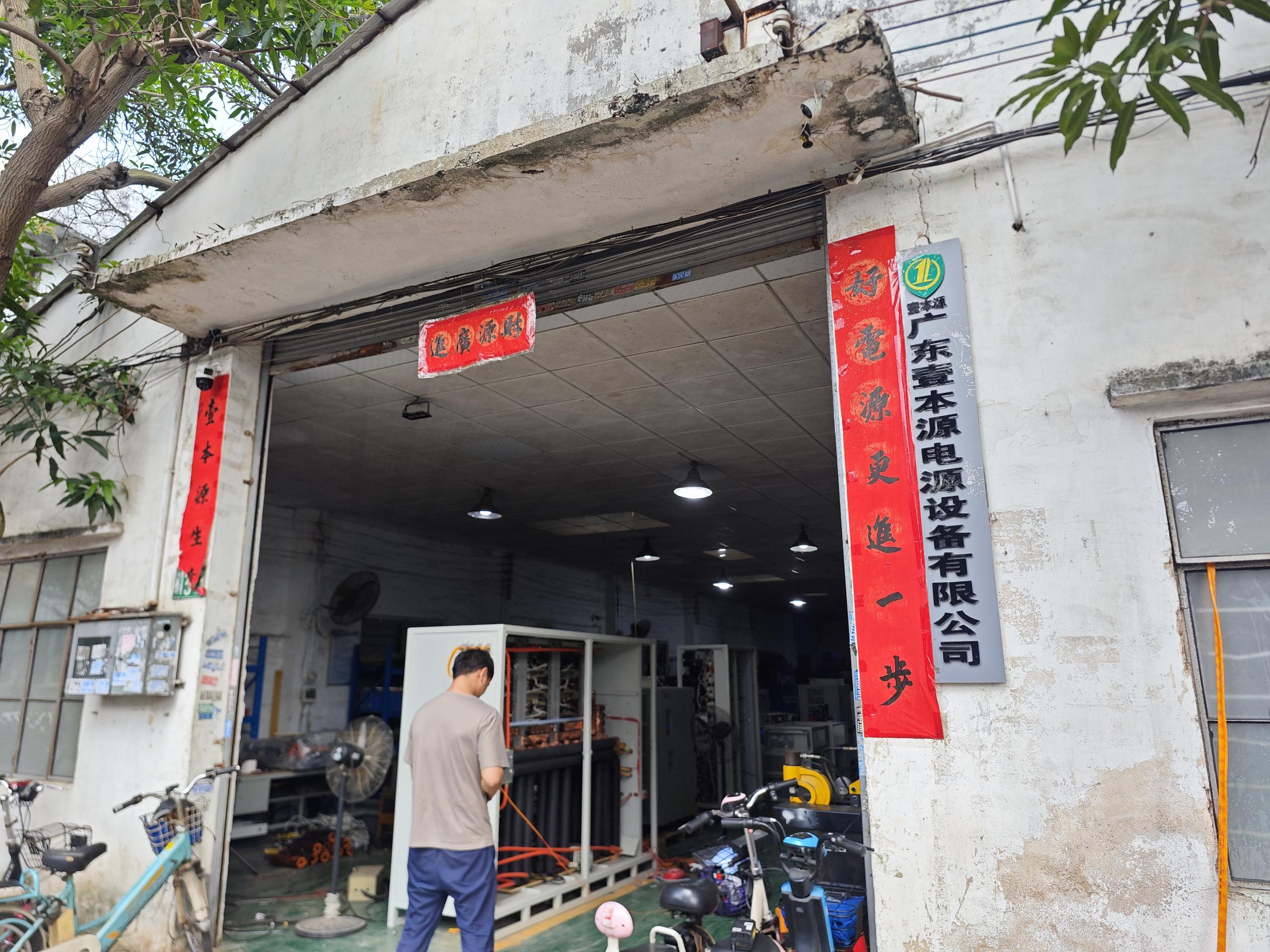
Guangdong Fenvix Technology Co., Ltd. — Your Direct Manufacturing Authority
Over 13 years of precision engineering, vertically integrated manufacturing, and global delivery across North America, Europe, Southeast Asia, and the Middle East.
Full In-House Engineering & Mechanical Fabrication
Founded in 2013 in Guangzhou, Guangdong, Fenvix maintains complete control over the engineering and manufacturing lifecycle. Unlike assemblers who outsource chassis and structural components, Fenvix operates its own comprehensive mechanical and metal fabrication workshop equipped with high-precision plate shearing, punching, CNC milling, drilling, and tapping machinery.
Every critical sub-assembly—including custom high-frequency ferrite transformers, solid T2 copper busbar conduction paths, and specialized water-cooling chill plates—is fabricated, assembled, and calibrated in-house. This end-to-end integration ensures unmatched mechanical structural integrity, optimal thermal conductivity, and agile lead times for non-standard voltage and current configurations.





Frequently Asked Questions by Industrial Sourcing Teams
Clear, direct answers regarding custom electrical parameters, thermal engineering, quality compliance, and international shipping terms.
What exact electrical parameters are required to configure a custom heavy-duty DC power supply?
When is water cooling technically necessary compared to forced air cooling?
Does Fenvix enforce Minimum Order Quantities (MOQ) on customized solutions?
What testing protocols are executed prior to factory departure?
What international trade terms, logistics, and payment methods are supported?
How is technical after-sales service and commissioning handled for international buyers?
Ready to Optimize Your Power Conversion Efficiency?
Consult directly with our power electronics engineering team in Guangdong. We analyze your load profile, electrical environment, and ripple specifications to deliver an optimized, factory-direct quotation within 24 business hours.