High-Performance Rectifiers Engineered for Gold & Precious Metal Deposition
Engineered for minimal ripple (<1%), high power factor (>0.95), and precise current density control in critical hard and soft gold plating applications.
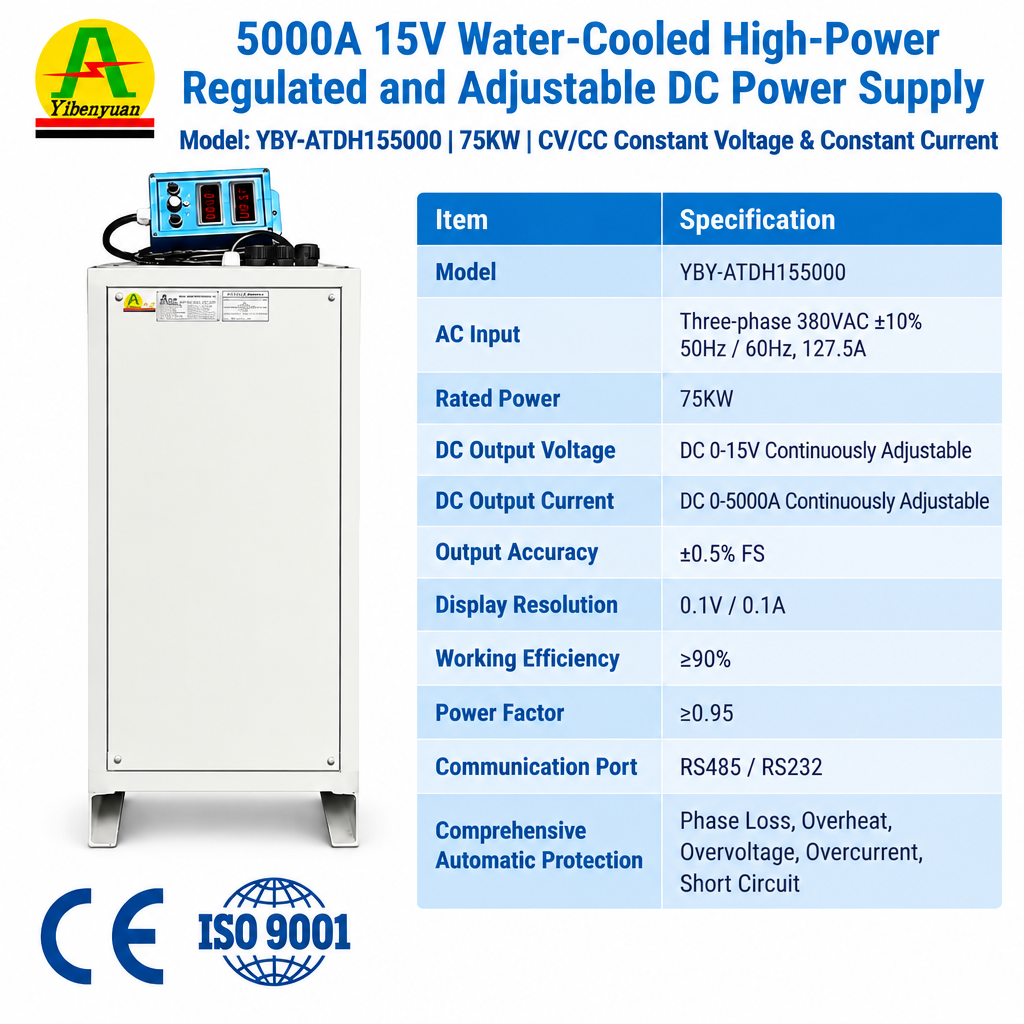
12V/15V 5000A-6000A 75KW Water-Cooled High Frequency Rectifier
- Output: 12V-15V / 5000A-6000A
- Cooling: Deionized Closed Loop Water
- Ripple: ≤ 1% Full Load
- Interface: RS485 / Modbus-RTU
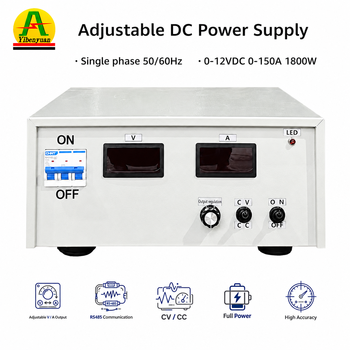
12V 150A High Frequency Precision Benchtop Plating Rectifier
- Output: 0-12V / 0-150A Adjustable
- Accuracy: ≤ ±0.5% Constant Current
- Application: Au/Ag PCB Finger Plating
- Certificates: CE / RoHS / EMC
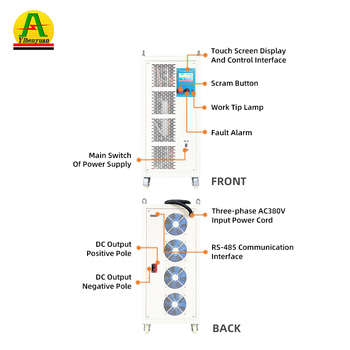
12V 4000A 48kW IGBT Modular Constant Voltage/Current Power Supply
- Output: 0-12V / 0-4000A Continuous
- Switching Freq: 20kHz - 40kHz IGBT
- Efficiency: ≥ 90% at Rated Current
- Protection: Thermal, Over-V, Phase Loss
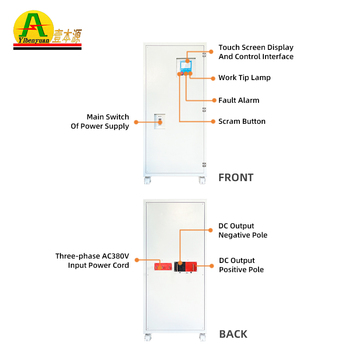
8000A 12V Heavy-Duty Water-Cooled Continuous Plating Rectifier
- Output: 12V / 8000A Heavy Duty
- Enclosure: IP54 Sealed Anti-Corrosion
- Duty Cycle: 100% 24/7 Industrial Run
- Control: Touchscreen + Analog 0-10V
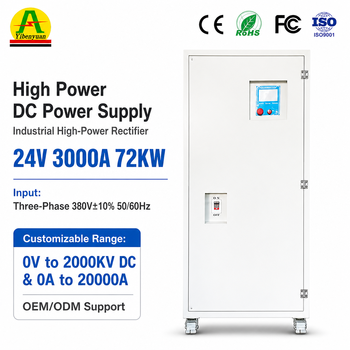
100A-3000A 12V/24V Multi-Stage Programmable DC Power Supply
- Output: 12V-24V / Up to 3000A
- Control: Multi-Ramp Current Slope
- Cooling: Forced Air Flow Channels
- Application: Gold strike, Decorative
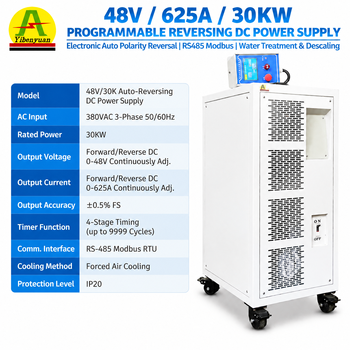
48V 625A 30kW Pulse Reverse & Periodic Reversing Rectifier
- Power: 30kW Solid-State Reversal
- Switch Time: Millisecond Polarity Flip
- Function: Electro-cleaning & Descaling
- Interface: CAN / RS485 / Industrial I/O
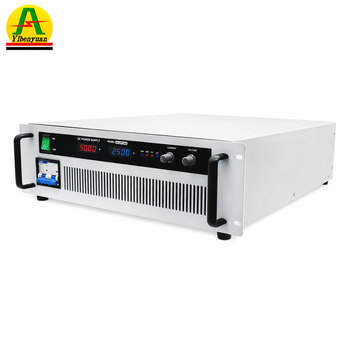
1.5kW-5kW Lab Grade Programmable Gold Plating Rectifier
- Regulation: CV / CC Auto-Crossover
- Resolution: 1mV / 1mA Digital Readout
- Harmonics: Low THD < 3%
- Benchtop: Compact 19" Rack Mountable
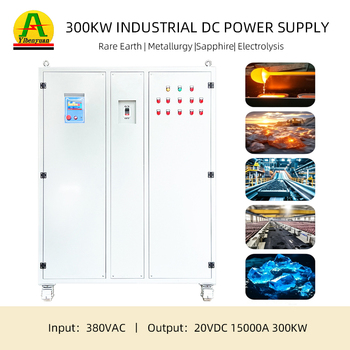
300kW 20V 15,000A High-Current Industrial Electrolysis Rectifier
- Current Output: Up to 15,000A Continuous
- Topology: IGBT Bridge Multi-Interleaving
- Cooling: External Heat Exchanger Ready
- Certification: ISO 9001 / CE Verified
Precision Current Rectification: The Foundation of Modern Gold Electrodeposition
In modern surface finishing, electroplating gold represents the highest tier of technical scrutiny and raw material capital investment. Unlike standard zinc galvanizing or decorative nickel deposition, gold electroplating—governed by baths containing potassium gold cyanide [KAu(CN)2], sulfite-based complexes, or gold chloride formulations—operates in a critical thermodynamic regime. A deviation in current density as small as ±0.05 A/dm² can result in dendritic grain growth, unacceptable layer roughness, high porosity, or excessive gold thickness that inflates manufacturing costs by millions of dollars over high-volume production cycles.
As the world's primary manufacturing hub, China's power electronics ecosystem has evolved past the era of conventional thyristor (SCR) rectifiers. Modern Chinese engineering focuses on high-frequency Insulated Gate Bipolar Transistor (IGBT) switching topologies, pulsed electric field controllers, and digitally synchronized multi-channel rectifiers that provide unprecedented stability for semiconductor wafer bumping, high-reliability lead frames, PCB edge connectors, aerospace avionics, and ultra-high-end watchmaking.
Electrochemical Regimes: Hard Gold vs. Soft Gold Requirements
Selecting an industrial gold plating rectifier requires matching the electrical output parameters to the metallurgical metallurgy of the target deposit:
- Hard Gold (Type 1 & 2, Grade C & D, ASTM B488): Codeposited with cobalt or nickel (0.1%–0.3%) to achieve Vickers hardness ratings of 130–200 HV. Demands extremely precise Constant Current (CC) control. Minor fluctuations in instantaneous current density dramatically alter the codeposition ratio of cobalt/nickel, impairing contact resistance and mating cycle durability in edge connectors and sliding switch contacts.
- Soft Gold (Type 3, Grade A, 99.9% Purity): Utilized for semiconductor wire bonding (thermosonic gold wire bonding) and high-temperature packaging. Requires zero foreign metallic contamination and ultra-low internal stress. Rectification must deliver uniform, laminar adatom deposition to prevent micro-fissuring and high annealing stresses.
| Performance Parameter | Conventional Silicon Controlled (SCR) | Fenvix High-Frequency IGBT Technology | Impact on Gold Plating Yield |
|---|---|---|---|
| Switching Frequency | 50 Hz / 60 Hz Line Frequency | 20,000 Hz – 40,000 Hz High Frequency | Finer grain structure, elimination of dendritic crystal nodes |
| Full-Range Ripple (RMS) | 5% – 15% (Requires massive filter chokes) | ≤ 1% across 10% – 100% current range | Reduces deposit porosity by up to 60%; cuts Au consumption by 8-15% |
| Electrical Conversion Efficiency | 65% – 75% Efficiency | 90% – 93% Efficiency | Significantly reduced electricity overhead in continuous 24/7 barrel/reel lines |
| Response Dynamics | Slow (100ms – 300ms) | Ultra-Fast (≤ 1ms to 5ms transient settling) | Instantaneous current stabilization when racks/strips enter electrolyte |
| Physical Footprint & Weight | Heavy, large transformer, large cabinet | Compact modular design (1/3 volume, 1/4 weight) | Can be installed adjacent to the plating tank, minimizing busbar voltage drop |
| Digital Connectivity | Analog dials or primitive 4-20mA loops | Modbus-RTU, Profinet, Ethernet/IP, CAN bus | Full integration with SCADA systems and real-time Ampere-Hour loggers |
Future Procurement & Technological Trends in Rectifier Sourcing
How global supply chain standards, digital metallurgy, and sustainability are transforming electroplating rectifier investments.
1. Pulse & Pulse-Reverse Plating (PRP) Domination
Future-facing electronic manufacturing lines are phasing out purely continuous DC in favor of high-frequency programmable forward/reverse pulse systems. During the reverse pulse interval, micro-peaks of the electrodeposited gold layer are selectively deplated, leveling surface micro-roughness. This allows suppliers to achieve target specifications with 15% to 25% thinner gold films, saving millions annually in gold salt consumption while eliminating blind-via starvation in HDI printed circuit boards.
2. Integrated Digital Twins & Industry 4.0 Telemetry
Procurement teams now mandate rectifiers with direct fieldbus interfaces (EtherCAT, Profinet, RS485). Real-time logging of current, voltage, temperature, and cumulative Ampere-Minute / Ampere-Hour counters is essential for trace-level metallurgical auditing in medical, defense, and aerospace gold plating. Future rectifiers will incorporate predictive edge-computing chips that signal thermal drift or busbar oxidation prior to component failure.
3. Modular N+1 Redundancy Architecture
Unscheduled downtime on a high-speed reel-to-reel gold plating line can cause catastrophic scrap costs and chemical tank contamination. Modular power supply topologies utilize hot-swappable 500A to 1500A power modules in parallel. Should an individual sub-module undergo thermal shutoff, remaining units automatically redistribute current within milliseconds, preserving continuous production without defective strip portions.
4. Closed-Loop Deionized Water Cooling
Corrosive cyanide, acid gold vapors, and airborne aerosol particles quickly degrade internal capacitors and heatsinks in traditional air-cooled cabinets. The international gold plating sector is standardizing on completely sealed IP54 to IP65 water-cooled rectifiers. Utilizing internal copper chill-plates and closed-loop liquid circulation, these systems isolate all sensitive power electronics from hazardous ambient shop atmospheres.
5. Total Cost of Ownership (TCO) Procurement Shifts
Procurement teams are shifting criteria from initial equipment purchase cost to five-year Total Cost of Ownership (TCO). In continuous industrial electroplating, a 15% efficiency gain through superior IGBT switching circuits and an active power factor of 0.95+ frequently offsets the capital acquisition cost of the rectifier within the first 14 months of operation through electric utility savings and reduced cooling plant loads.
6. Wide-Bandgap Semiconductors (SiC & GaN)
Next-generation Chinese power electronic manufacturers are prototyping Silicon Carbide (SiC) MOSFET-based rectifiers. SiC architecture allows switching speeds above 100kHz with virtually negligible switching losses. This enables microscopic filtering components, sub-0.5% current ripple, and ultra-compact, high-density plating power modules capable of operating reliably at significantly higher ambient ambient temperatures.
Why Tier-1 Plating Plants Partner with Guangdong Fenvix Technology
Founded in 2013 in Guangzhou, Guangdong, Fenvix represents the pinnacle of Chinese precision power conversion manufacturing.
International sourcing of industrial power supplies requires verifiable engineering competence, transparent quality management systems, and direct communication with design engineers rather than intermediary export agents. For more than 13 years, Guangdong Fenvix Technology Co., Ltd. has operated an integrated 3,000m² production and testing complex in Guangzhou, delivering custom high-frequency rectifiers, programmable DC switching sources, and frequency converters across North America, Europe, Southeast Asia, and the Middle East.
ISO 9001 Certified
Strict quality assurance protocols across incoming raw materials, transformer winding, assembly, and multi-stage load-bench burn-in.
TÜV Rheinland Verified
On-site inspected production facilities, fabrication machinery, engineering credentials, and global export compliance verification.
In-House Sheet Metal & Busbars
Total mechanical control with automated shearing, CNC punching, milling, and precision copper busbar machining inside our factory.
Zero MOQ & Full Customization
From single benchtop prototypes for R&D gold strike baths to 15,000A continuous multi-tank modular plants. Direct engineer access.
Frequently Asked Questions: Gold Plating Rectifier Sourcing
Essential technical, operational, and commercial insights for international engineering and procurement professionals.
Why is output ripple factor (<1%) critically decisive when electroplating gold? +
How do I determine whether to specify Forced Air Cooling or Water Cooling for my facility? +
- Choose Forced Air Cooling: For currents under 1000A, laboratory testing setups, or clean electrical control rooms isolated from plating shop fumes. Air cooling requires lower initial setup cost since external chillers are unnecessary.
- Choose Closed-Loop Water Cooling: Mandatory for rectifiers operating directly beside aggressive plating tanks (cyanide, acid, hydrochloric fumes). Fenvix water-cooled rectifiers feature fully sealed IP54/IP55 cabinets with no outside air intake, protecting sensitive IGBT modules, copper busbars, and logic circuits from acidic corrosion. Water cooling is also required for continuous currents of 2000A to 15,000A to maintain optimal thermal operating regimes.
What technical specifications must be provided to receive a customized rectifier design? +
- AC Input Parameters: Nominal voltage (e.g., 380V, 415V, 480V), phases (3-phase), and frequency (50Hz or 60Hz).
- DC Output Profile: Maximum required continuous DC voltage (e.g., 12V, 15V, 24V) and current (e.g., 500A, 3000A, 6000A).
- Control Topology: Constant Current (CC), Constant Voltage (CV), or automatic crossover; requirements for periodic pulse or pulse-reverse functionality.
- Automation Interfaces: RS485 Modbus, Profibus, 0-10V / 4-20mA analog isolated signals, or local touch-screen HMI.
- Duty Cycle & Chemistry: Continuous 24/7 or batch run; barrel, rack, or continuous reel-to-reel strip line.
What certifications and international standards do Fenvix power supplies comply with? +
How does an integrated Ampere-Hour (Ah) meter assist in gold electroplating bath management? +
What are the commercial trade terms, packaging standards, and lead times for export? +
What after-sales service and technical commissioning support are provided to overseas buyers? +
Consult With Our Senior Power Supply Engineers Today
Whether configuring a 150A laboratory gold-strike rectifier or designing a multi-cabinet 10,000A water-cooled reel-to-reel system, our Guangzhou engineering department provides full schematic solutions, CAD cabinet dimensions, and formal quotations within 24 hours.