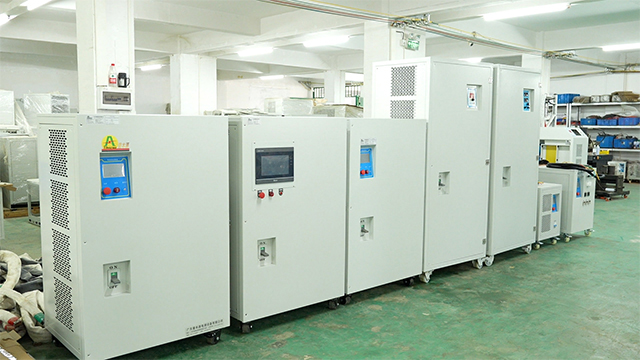
CE Certified DC Power Supply Manufacturers & Factory
Industrial-Grade High Frequency Switch-Mode DC Rectifiers, Programmable HV Systems, and Solid-State Converters Built Under Strict ISO 9001 & CE Quality Regimes.
Industrial Portfolio
Engineered Rectification & Regulated DC Power Systems
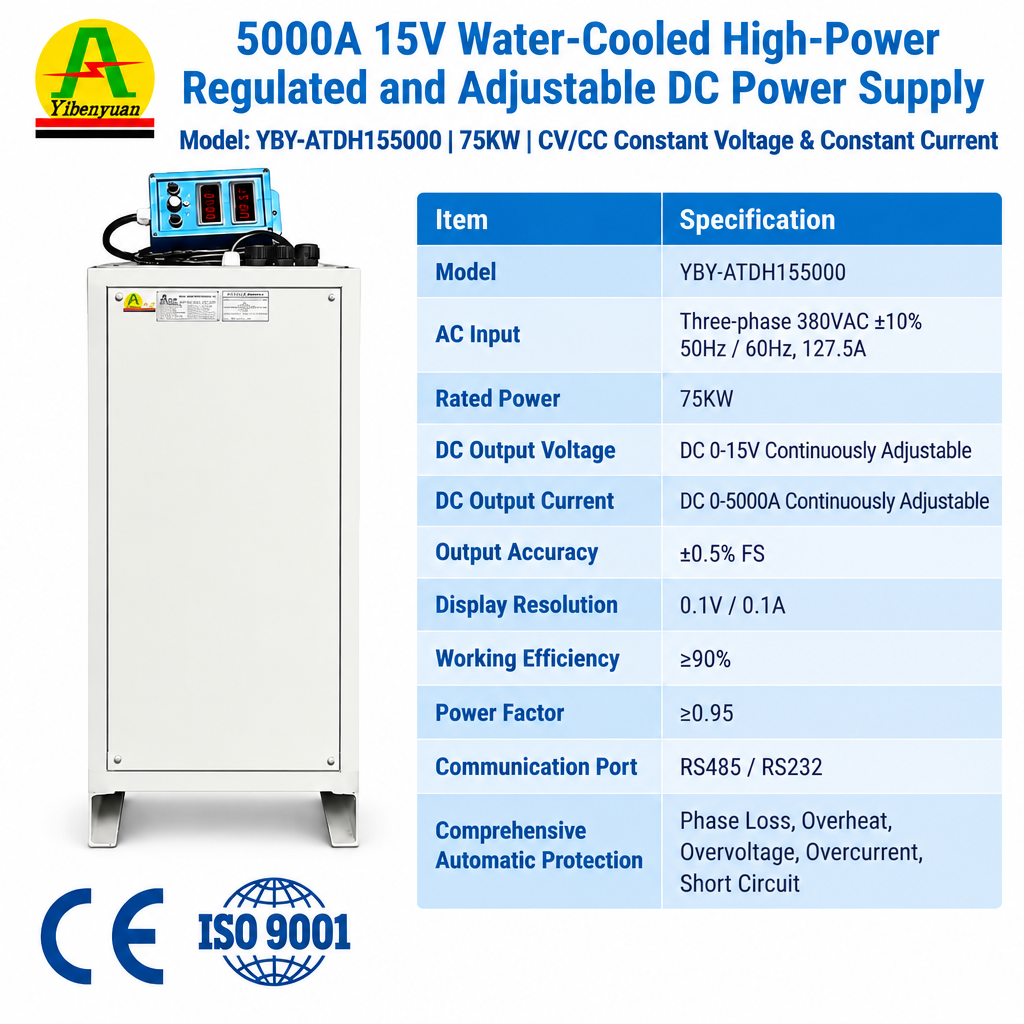
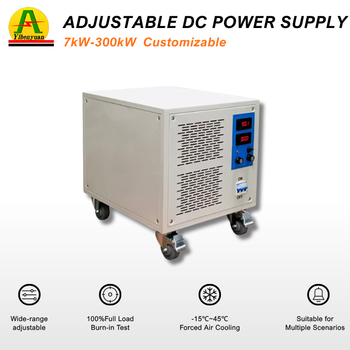
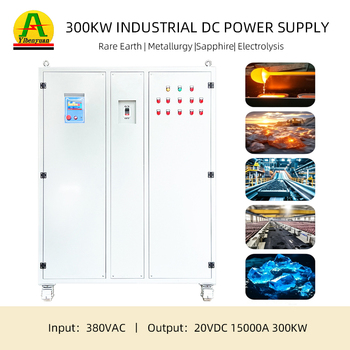
From heavy chemical electrolytic baths requiring up to 15,000A to sub-millisecond dynamic test sources operating at 3,200V, our CE-compliant equipment delivers unwavering ripple suppression and full thermal resilience.
Industrial power conversion is shifting rapidly. Global tier-1 purchasers no longer buy merely on nameplate current; energy efficiency, regulatory traceability, and communication protocols dictate modern procurement criteria.
Total Cost of Ownership (TCO) vs. Initial Capital Expense
Industrial rectifiers in continuous electroplating or electrolysis facilities consume many times their capital acquisition price in electric power each year. Transitioning from legacy Silicon Controlled Rectifiers (SCR/Thyristors) with 70-75% efficiency to switch-mode IGBT topologies exceeding 90-93% yields electricity savings that pay back the machine costs within 8 to 14 months of operation. Sourcing managers now require verified efficiency graphs under 30% to 100% load variations.
Decentralized N+1 Redundancy Architectures
Centralized monolithic power frames introduce catastrophic single points of failure. The procurement of modular rack topologies enables plants to sustain unexpected module trips without halting production. In critical surface-finishing lines or aerospace testing cells, an N+1 or N+2 configuration automatically re-allocates current demand across functioning sub-modules, lowering downtime risks and simplifying routine field servicing without line shutdowns.
Audit-Proof CE Conformity & Harmonized Standards
Importers across the EU and North America encounter severe customs confiscation risks due to fraudulent or non-verifiable CE labels. Strategic procurement demands complete Technical Construction Files (TCF), testing verification under Low Voltage Directive (LVD 2014/35/EU, EN 61010-1) and Electromagnetic Compatibility (EMC Directive 2014/30/EU, EN 61000-6-2/4), and on-site factory validation via accredited inspection authorities like TÜV Rheinland.
R&D Evolution
Technological Development Trends in Industrial DC Architecture
The confluence of Wide Bandgap semiconductors, edge DSP telemetry, and high-heat environments is redefining what engineers expect from heavy-duty power supplies.
Silicon Carbide (SiC) Power Stages
Wide-bandgap SiC MOSFET switches allow operational frequencies upwards of 50kHz to 100kHz in megawatt-scale equipment. This dramatically shrinks inductive magnetic cores and capacitors while drastically diminishing switching losses, offering unmatched dynamic load recovery.
Predictive DSP Health Diagnostics
32-bit floating-point digital signal processors sample inner loop current and DC bus voltage at hundreds of kilosamples per second. Algorithms monitor capacitor equivalent series resistance (ESR) drift, IGBT thermal degradation, and water-channel flow impedance to predict failures before they happen.
Multi-Bus SCADA & IIoT Control
Analog potentiometers are obsolete in state-of-the-art manufacturing plants. Modern power units integrate isolated Modbus-TCP, Profinet, EtherCAT, and CANopen protocols, feeding real-time operating metrics straight into plant-wide ERP and MES automation stacks.
Corrosion-Proof Fluid Hydrodynamics
In aggressive acidic, alkaline, or moist galvanic environments, forced-air cooling pulls corrosive vapors directly over electronics. Next-generation power supplies feature fully hermetic IP55 enclosures cooled by closed-loop, deionized water manifolds that isolate all core electronics.
Selection Framework
Comprehensive Engineering Matrix for Industrial DC Sizing
Select optimal power topologies based on electrical stress, allowable ripple factors, chemical dynamics, and duty cycle variables.
Application Sector
Recommended Voltage / Current
Allowable Ripple / Dynamic Response
Cooling & Enclosure Standard
Primary Regulatory Focus
Precious Metal Electroplating (Au, Ag, Rh)
0–12V DC / 50A–1,000A
< 1% Peak-to-Peak RMS, CC Precision ±0.2%
Forced Air, Sealed Modular Cassette
EN 61000-6-3 (Low Radiated Noise)
Industrial Hard Chrome & Galvanizing
12V–24V DC / 3,000A–15,000A
< 3% Ripple Factor, Continuous Constant Current
Water-Cooled Direct Plate Heat Sink (IP54)
EN 61010-1 Electrical Safety, CE LVD
Aluminum & Titanium Anodizing
18V–150V+ DC / 500A–5,000A
Programmable Current Step Ramp-up Profiling
Water-Cooled or Duct-Isolated Air
CE Industrial Machinery & Low Voltage
Wastewater Scale Removal & Descaling
24V–48V DC / 200A–1,500A
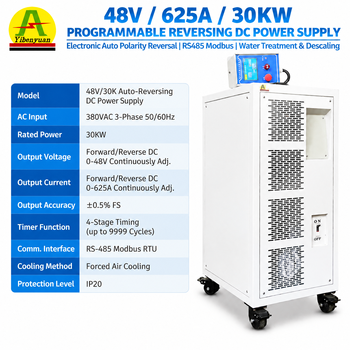
Auto-Reversing H-Bridge, Zero Voltage Crossing
Forced Air with Anti-Corrosion PCB Coating
RoHS 2.0 Material Compliance, CE EMC
EV Traction Battery & Inverter Testing
400V–1,000V DC / 20A–300A
< 0.1% Full Scale Ripple, Transient < 1ms
High Velocity Redundant Fan Trays
EN 61010-1 High Voltage Laboratory Testing
Aviation GSE Ground Power (MIL-STD)
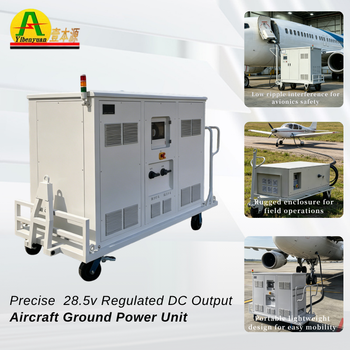
28.5V DC / 600A Cont., 2000A Peak
Drop-out Recovery < 50ms under 300% Inrush
Shock-Mounted Mobile Field Chassis (IP55)
MIL-STD-704F, ISO 6858, CE Harmonized
Manufacturing Excellence
Vertical Production from Raw Sheet Metal to 100% Full-Load Burn-In
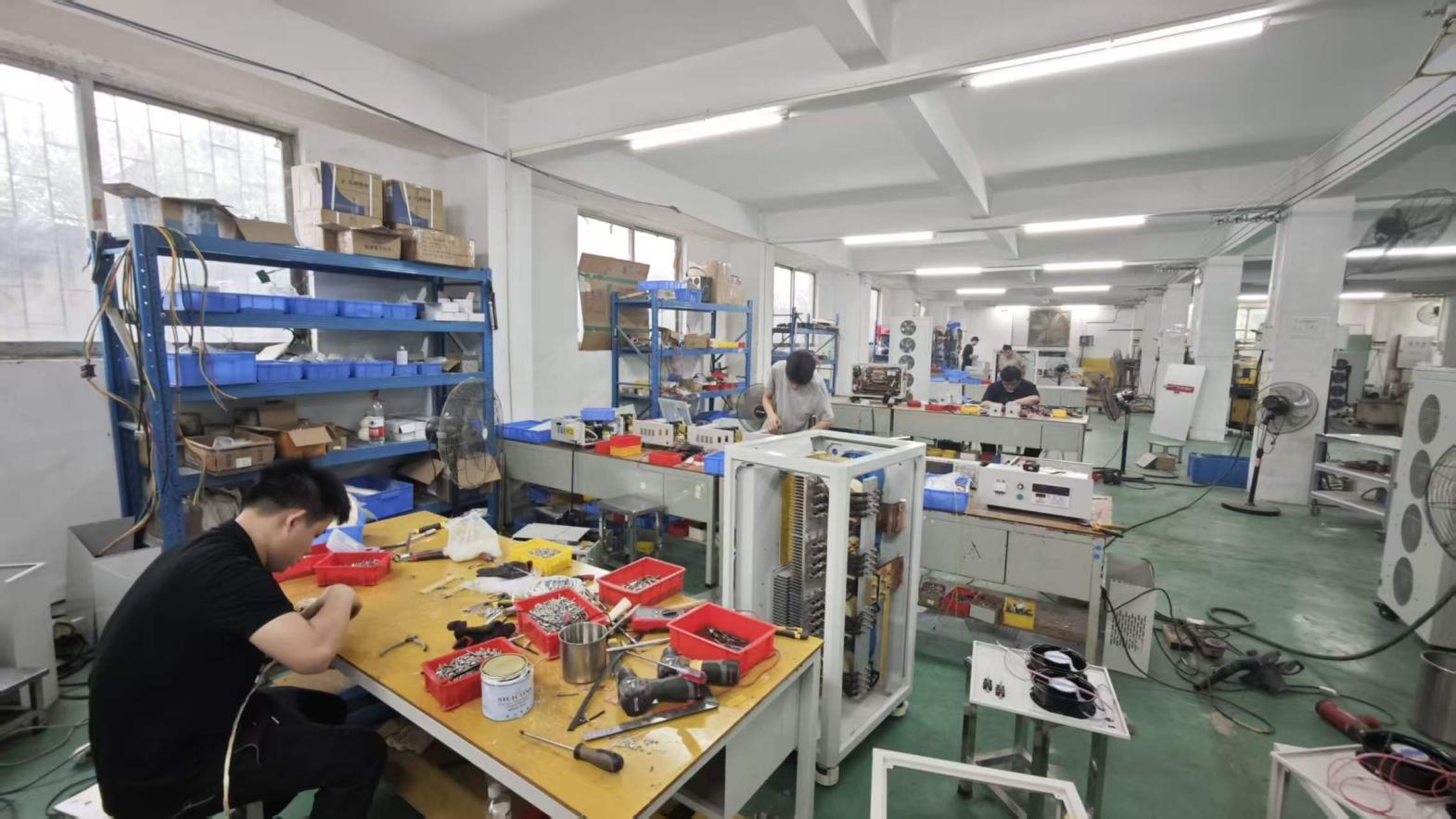
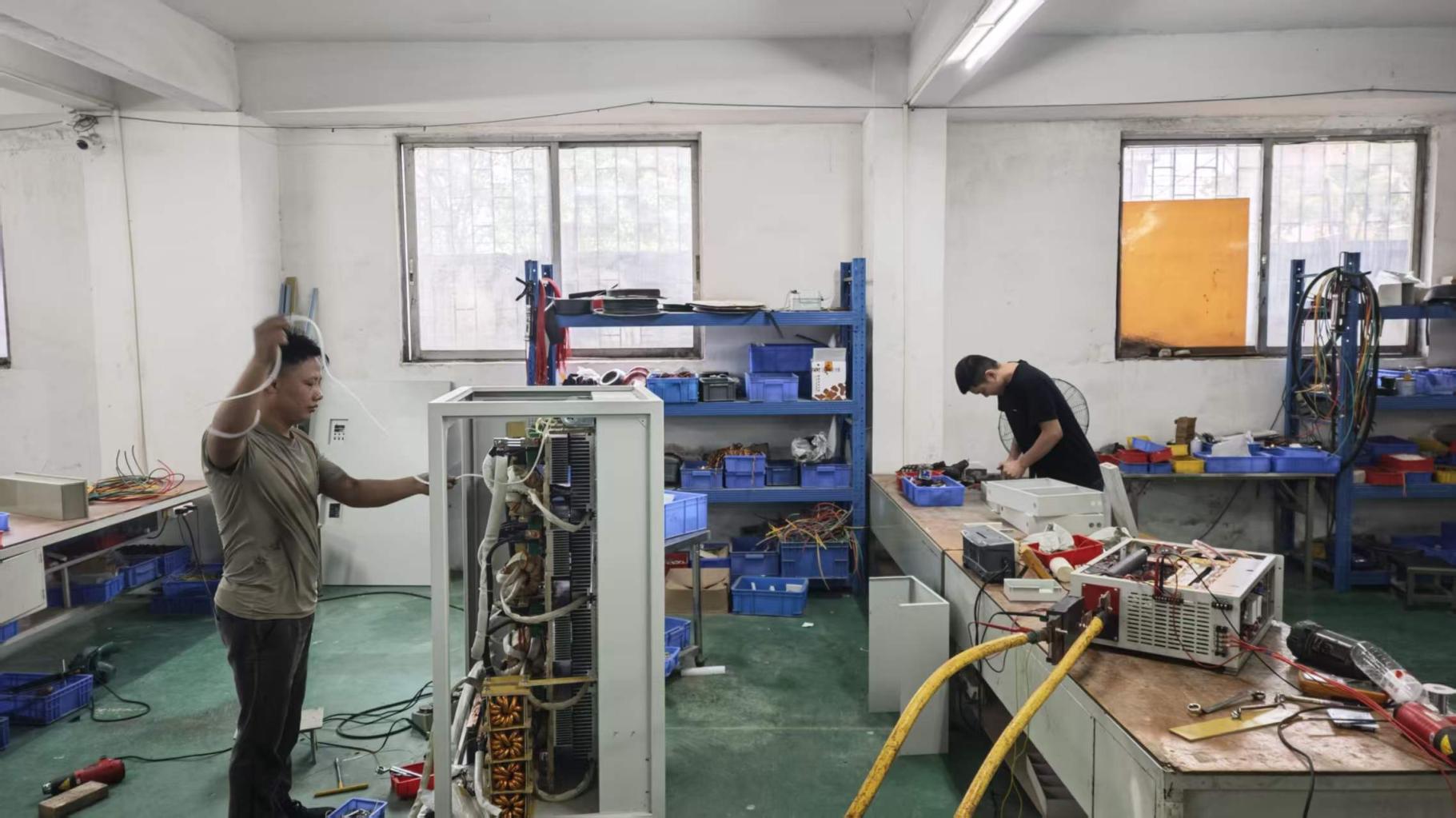
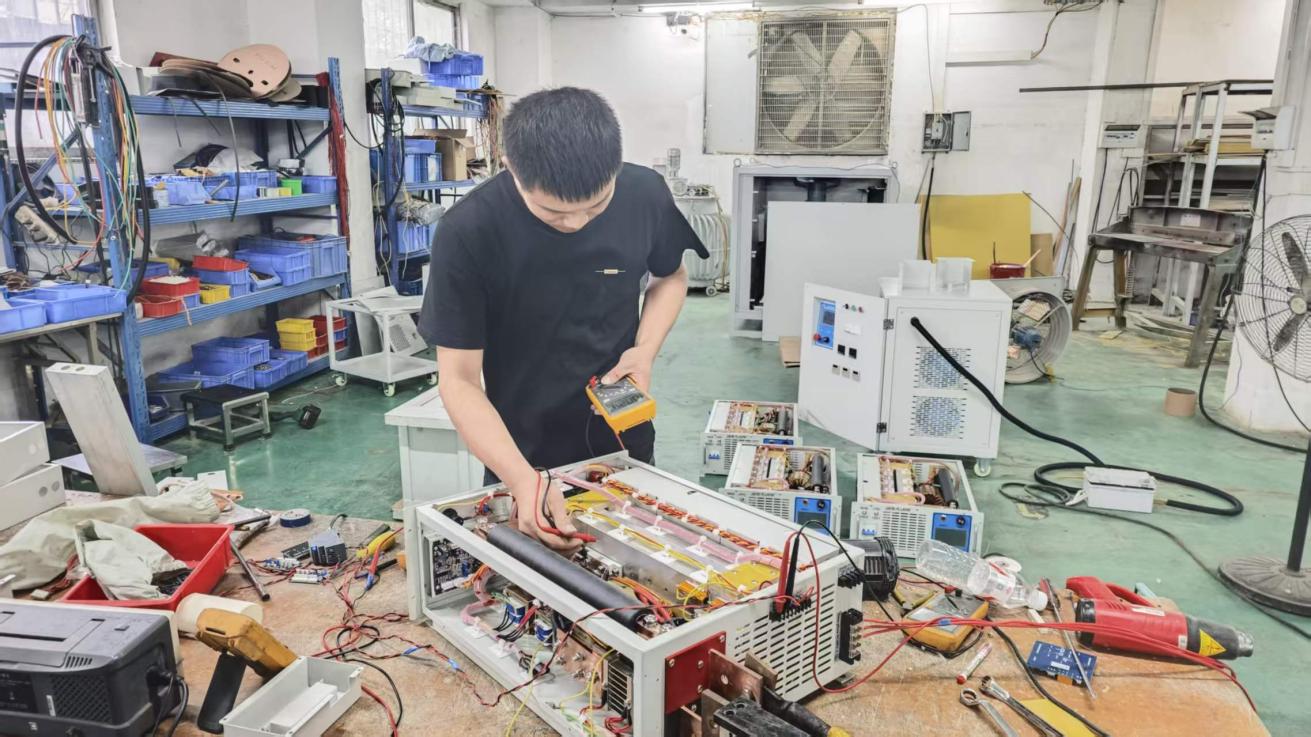
Operating from our modern manufacturing center in Guangdong, China since 2013, Guangdong Fenvix Technology Co., Ltd. eliminates third-party trading markups and uncontrolled sub-contracting risks. By manufacturing our own structural chassis, forming our own busbars, and conducting in-house transformer winding, we control precision and lead times from start to finish.
Frequently Asked Questions for Sourcing & Plant Engineers
Direct answers to the most common configuration, electrical, thermal, and shipping inquiries received by our engineering sales office.
What essential parameters are required to configure a custom industrial DC power supply?
To properly size the transformer, IGBT stage, and cooling architecture, our engineering team requires: (1) Primary AC input voltage, frequency, and phase count (e.g., 380V/400V/480V ±10%, 50/60Hz); (2) Desired DC output voltage and current ranges with adjustment profiles; (3) Preferred regulation modes: Constant Voltage (CV), Constant Current (CC), or automated cross-over; (4) Allowable peak-to-peak ripple factor (RMS); (5) Operating duty cycle (continuous 24/7 or intermittent pulse); (6) Thermal dissipation environment (ambient air quality vs. availability of industrial chilled water); (7) Control interfaces (e.g., isolated 0-10V, 4-20mA, RS485 Modbus-RTU, Profinet, or manual touch display); and (8) Specific international compliance targets (CE LVD, CE EMC, RoHS).
What are the practical engineering thresholds for selecting water cooling over forced-air cooling?
Forced air cooling is economically and mechanically optimal for systems below 30kW–40kW situated in climate-controlled test bays or laboratories where the surrounding air is free of harsh vapors. In contrast, water cooling is strongly recommended when: (1) Output current exceeds 3,000A to 5,000A, where internal heat dissipation reaches hundreds of BTU/hr; (2) The power unit resides within electroplating, anodizing, or chemical pickling rooms where airborne hydrochloric or sulfuric acid vapors would quickly degrade fans and copper busbars; or (3) The power cabinet must be fully hermetically sealed (IP54 to IP65) to protect inner electronics from conductive dust, moisture, and extreme ambient heat up to 50°C.
How does high-frequency IGBT switch-mode technology compare against legacy SCR (Thyristor) rectifiers?
High-frequency switch-mode rectifiers (operating at 20kHz–50kHz) provide measurable advantages over line-frequency (50/60Hz) SCR rectifiers: (1) Energy Efficiency: IGBT designs routinely operate at 90%–93% efficiency, compared to 68%–78% for thyristors; (2) Physical Footprint: Switch-mode transformers are approximately 70% lighter and 60% smaller, saving valuable plant floor space; (3) Output Uniformity: Typical unfiltered ripple from an SCR unit is roughly 5%–10% at lower voltages, whereas IGBT converters hold output ripple below 1%–2% across the entire curve, resulting in denser, more uniform plating layers and lower chemical bath consumption; (4) Fast Dynamic Response: Millisecond correction times protect sensitive loads against grid line dips and transient spikes.
What does CE certification mean for high-power DC equipment, and how is it verified?
True CE compliance for industrial power systems is governed by two complementary European Directives: the Low Voltage Directive (LVD 2014/35/EU, harmonized standard EN 61010-1 for safety, creepage/clearance distances, dielectric withstand, and grounding integrity) and the Electromagnetic Compatibility Directive (EMC 2014/30/EU, harmonized standards EN 61000-6-2 for industrial immunity and EN 61000-6-4 for radiated/conducted emissions). Guangdong Fenvix units undergo full physical lab testing to ensure switching harmonics do not feed back into the public grid or interfere with adjacent digital logic, PLCs, and SCADA infrastructure. Factory test reports, circuit schematics, and official Declarations of Conformity are supplied directly to the customer.
What is your Minimum Order Quantity (MOQ) and production lead time for customized units?
We maintain an absolute MOQ of 1 set. We support R&D pilots, boutique chemical labs, and single custom machine retrofits with the exact same engineering care provided to high-volume equipment builders. Lead times for standard configurations (such as 12V 1000A–5000A plating rectifiers or 28.5V GPUs) range from 10 to 18 business days. Complex megawatt-scale custom projects (like 15,000A water-cooled units, reverse-polarity timers, or 100kV capacitor supplies) are typically built, burned-in under full load, and packed for export within 25 to 35 business days.
How are international logistics, payments, and global after-sales warranties handled?
We support global shipping terms including FOB (Shenzhen/Guangzhou), CFR, CIF, EXW, FCA, and complete DDP (Delivered Duty Paid) to your factory doorstep. Accepted payment instruments include Wire Transfer (T/T), Letter of Credit (L/C at sight), Western Union, and major credit cards in major currencies (USD, EUR, GBP, AUD, CAD, JPY, CNY). Every machine is backed by our standard 12-to-24 month factory warranty. We ship all modular units with complete field-service schematic prints, plug-and-play driver replacement boards, and provide remote video commissioning directly with our design engineers. On-site commissioning support is also available for high-capacity installations.
Build Your Custom Industrial DC Power System Today
Share your voltage, current, process, and cooling requirements with our engineering team. We deliver custom design layouts, detailed electrical schematics, and factory-direct pricing within 24 hours.